Responsible Consumption
JHU is committed to integrating sustainability into our entire value chain by fostering a culture of responsible consumption. From procurement to end of use, we are rethinking food systems, reducing waste sent to incineration and landfills, and driving practices that minimize environmental impact across the university.
GOAL 7. Commit JHU on a Pathway to Zero Waste
Through the collaboration of a cross-divisional working group, JHU engaged in efforts across all campuses to increase the level of waste diverted from incineration and landfill and decrease amounts of pre- and post-consumer food waste.
Increase our waste stream diversion to 50% by 2030
In addition to promoting increased recycling and composting, JHU will encourage waste reduction and reuse to achieve 50% waste diversion from landfill and incineration.
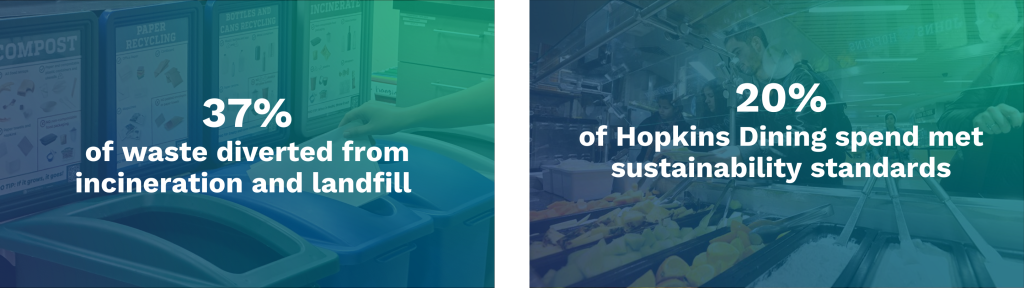
37% of waste at JHU was diverted from incineration and landfill
Methodology: Collected waste data from vendors and divisional representatives. Weight of diverted waste divided by weight of total waste generated.
Notes:
- Use the toggle above the graph to switch between diversion rate and total tonnage views.
- In 2024, JHU transitioned to calendar year waste reporting to align with other metrics. All years prior to 2024 indicate fiscal year data.
Annual per capita waste was reduced 8.1% from 2022
Methodology: Calculation of total waste generated divided by the entire JHU population
Note: Total waste refers to all waste generated, including recycling, compost, and trash.

JHU’s waste diversion increased to 37% as a result of expanded zero waste initiatives. The expansion of composting to all campuses led to an increase of 153 tons of material diverted.
The Sustainability Leadership Council Zero Waste Working Group established a university-wide standard for waste signage across JHU buildings, providing more consistent and better guidance for users to properly sort their waste.
In addition to increasing our waste diversion from incineration and landfill, JHU is committed to reducing the amount of waste we generate, despite growth in our campus and community.
- Since establishing a baseline in 2022, waste per capita has decreased by almost 23 pounds, marking a reduction of 8.1% per JHU affiliate
- Meanwhile, JHU’s overall waste stream has decreased by 5.3% since 2022

Waste stream diversion efforts have also been made in University Administration.
- The Real Estate Office piloted centralized waste stations as a standard for new tenants to improve waste sorting behaviors and increase diversion
- Design and construction projects in Real Estate and Dining successfully salvaged furniture and equipment, resulting in 5 tons of material repurposed for internal reuse and donation to local non-profits
JHU’s School of Medicine conducted a waste audit and led waste education initiatives, resulting in a 35% increase in scrap metal diversion.
In addition, APL created a Waste Champion Network, composed of 36 volunteers representing all departments, to assist fellow staff in sorting their waste based on the addition of composting and new recycling guidelines.
Achieve zero pre-consumer food waste at all dining and retail locations
JHU will eliminate food waste from kitchen preparation across the university in order to increase organics diversion and minimize waste.
61% of all JHU dining and retail locations perform back-of-house composting, producing no pre-consumer food waste during preparation
Methodology: Surveyed JHU divisional sustainability staff to verify list of dining and retail locations that have back-of-house composting in kitchens
Note: Back-of-house composting is collecting and composting food waste from kitchen preparation before serving

Johns Hopkins University has expanded compost collection to all campuses, with the addition of APL in January, Peabody in April, and Hopkins Bloomberg Center in Washington, D.C., in August.
Hopkins Dining implemented a robust monthly sustainability audit system for all locations to ensure food waste prevention, waste management, and sustainable purchasing commitments are consistently followed.
Eliminate single use plastics in dining and retail locations with available alternatives
JHU is prioritizing reusable and compostable products, as part of an effort to phase out petroleum-based single use plastics
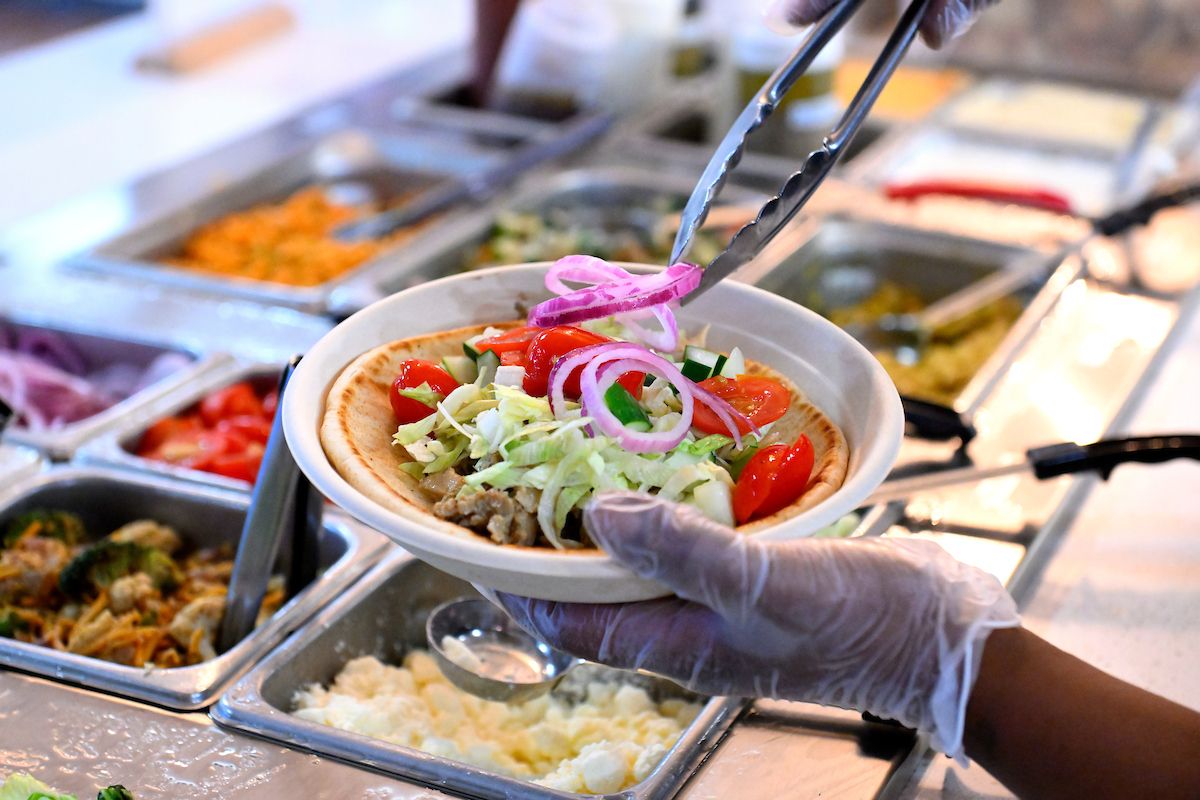

100% of Hopkins Dining and 50% of Homewood campus dining affiliates now use compostable food and beverage to-go packaging, as petroleum-based single use plastic packaging continues to be phased out.
- Hopkins Dining created an ordering system that ensures all retail and residential locations use compostable to-go packaging and substitutes are identified in case of supply chain shortages
- Hopkins Dining also extended its competitive pricing and ordering system to dining affiliates across campus
100% of APL cafes have converted to compostable packaging.
Spotlight: Reducing food waste on campus and in our community
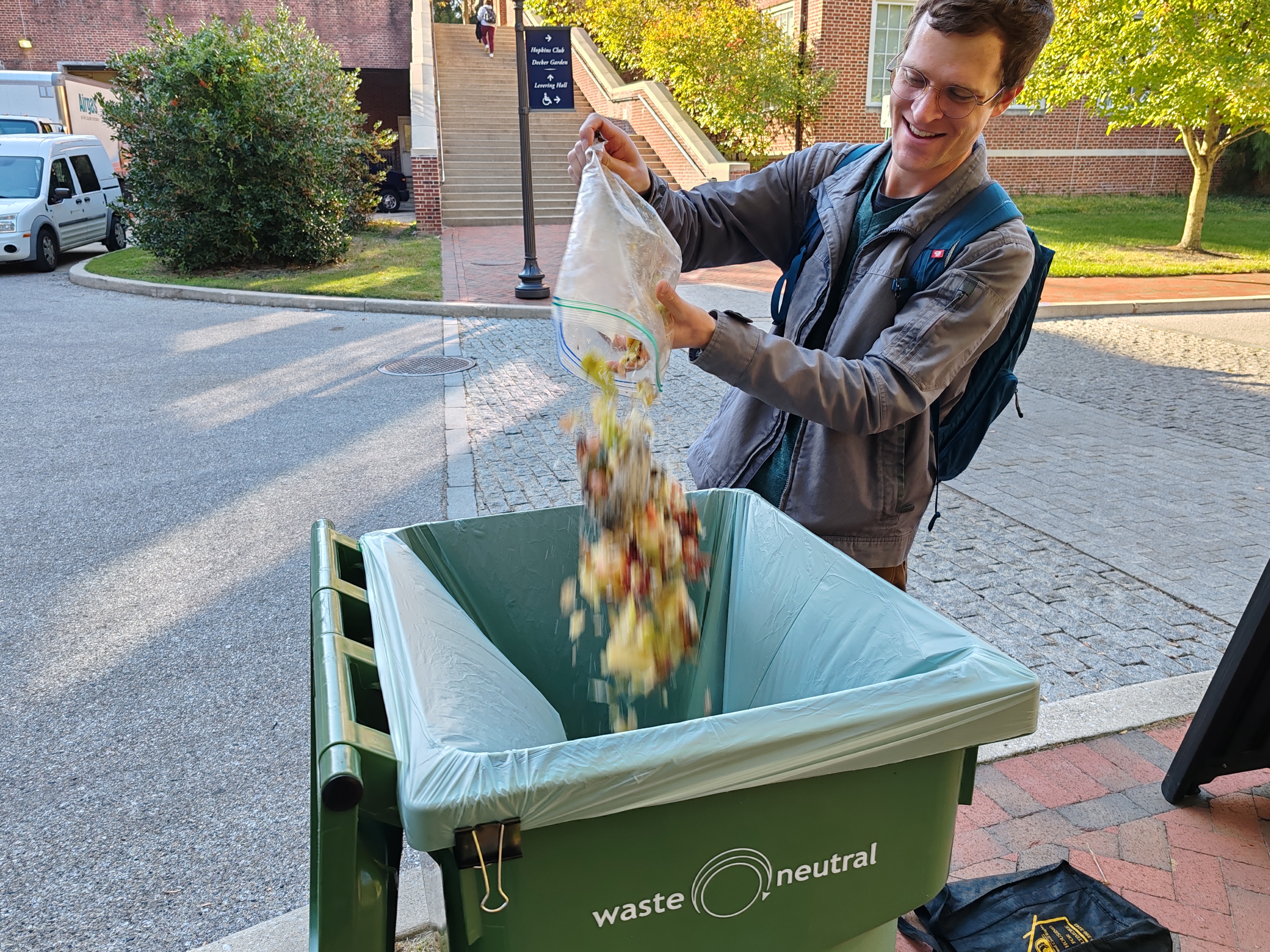

As part of the university’s efforts to reduce food waste and increase zero waste initiatives, OCS partnered with Baltimore City Department of Public Works to establish 2 community food scrap drop-off sites at Homewood and the School of Medicine, open to JHU affiliates and community residents
- Over 3,200 lbs of food scraps were composted during the past year

In addition, the Free Food Alert program, which enables event planners to post notices of leftover food from events, expanded to the Hopkins Bloomberg Center, Peabody, and the Schools of Medicine, Nursing, and Public Health.
- 143 Free Food Alert events were hosted across the university over the past year, a 180% increase from the prior year
GOAL 8. Leverage Our Food Systems to Enhance Sustainable Production, Consumption, and Local Economies
JHU has worked to increase sustainable and local food procurement, educate students about sustainable food consumption habits, and leverage the university’s dining programs as a space for translational education and research.
Increase sustainable food procurement and consumption habits
As part of JHU's dining programs, the university is committed to increasing sourcing of sustainably-certified products and low-carbon menu options
20% of Hopkins Dining spend meets sustainability standards
Methodology: Hopkins Dining uses MaetaData, a software that translates food supplier data into procurement analytics. Sustainability standards comprise AASHE STARS sustainable dining criteria, as well as other industry standards.

As part of JHU’s efforts to enhance sustainable food procurement, Hopkins Dining developed and launched a new local and seasonal purchasing strategy with The Common Market.
- Hopkins Dining created a digital marketing program highlighting local purchases on display screens in dining locations, as well as a social media campaign to provide backstories of local farm partners
Hopkins Dining also hosted the second-annual Picnic for the Planet which featured local, seasonal ingredients; the event saw a 25% growth in attendance from the prior year.

APL uses a scorecard to track their sustainable food spend. In the previous year:
- 100% of poultry purchased was produced without routine use of antibiotics
- 79% of eggs purchased were certified humane and cage-free
- 71% of seafood purchased was sourced from sustainable sources meeting Seafood Watch criteria

As part of JHU’s commitment to measure and reduce GHG emissions from Hopkins Dining food procurement 25% by 2030, a baseline calculation of 5,690 metric tons of GHG emissions per year was established in 2024. This baseline will be used to measure progress annually and to help incentive low-carbon menu choices.
- This analysis was supported by the Menus of Change University Research Collaborative (MCURC), a global network of colleges and universities using campus dining as living laboratories for change.
- MCURC and the World Resources Institute conduct an annual food procurement data collection process and emissions calculation that contributed directly to this effort.
Expand local food procurement in JHU dining programs
Sourcing of local food products is a cornerstone of the university's commitment to developing sustainable food systems
30% of Hopkins Dining food was locally-sourced, including 8% from hyperlocal sources
Methodology: Hopkins Dining uses MaetaData, a software that translates food supplier data into procurement analytics, including calculations of local spend. “Local” food was sourced from within 250 miles of Homewood campus, as supported by AASHE STARS and other industry standards. “Hyperlocal” food was sourced from 25 miles of campus. The hyperlocal definition of 50 miles from the Center for Good Food Purchasing, and other industry standards, was narrowed further to focus the impact on Baltimore.
Notes: Click on the supplier circles to show the top spend category and spend amount.

Hopkins Dining continued efforts to expand procurement from Baltimore and other local businesses, and to spotlight local food partners.
- Hosted the first on-campus Farm Stand with Richfield Farm, providing Homewood students, affiliates, and community members with access to local, seasonal products
- Organized and hosted 4 off-campus sustainability trips – 1 local vendor visit to Taharka Brothers Ice Cream and 3 farmers market tours – to build a stronger connection between JHU students and Baltimore’s local food system
Leverage JHU dining programs for translational education and research
Hopkins Dining led one of the first Campus as a Living Lab projects, enabling the university to measure and assess reasons for post-consumer food waste and better address student-facing education.
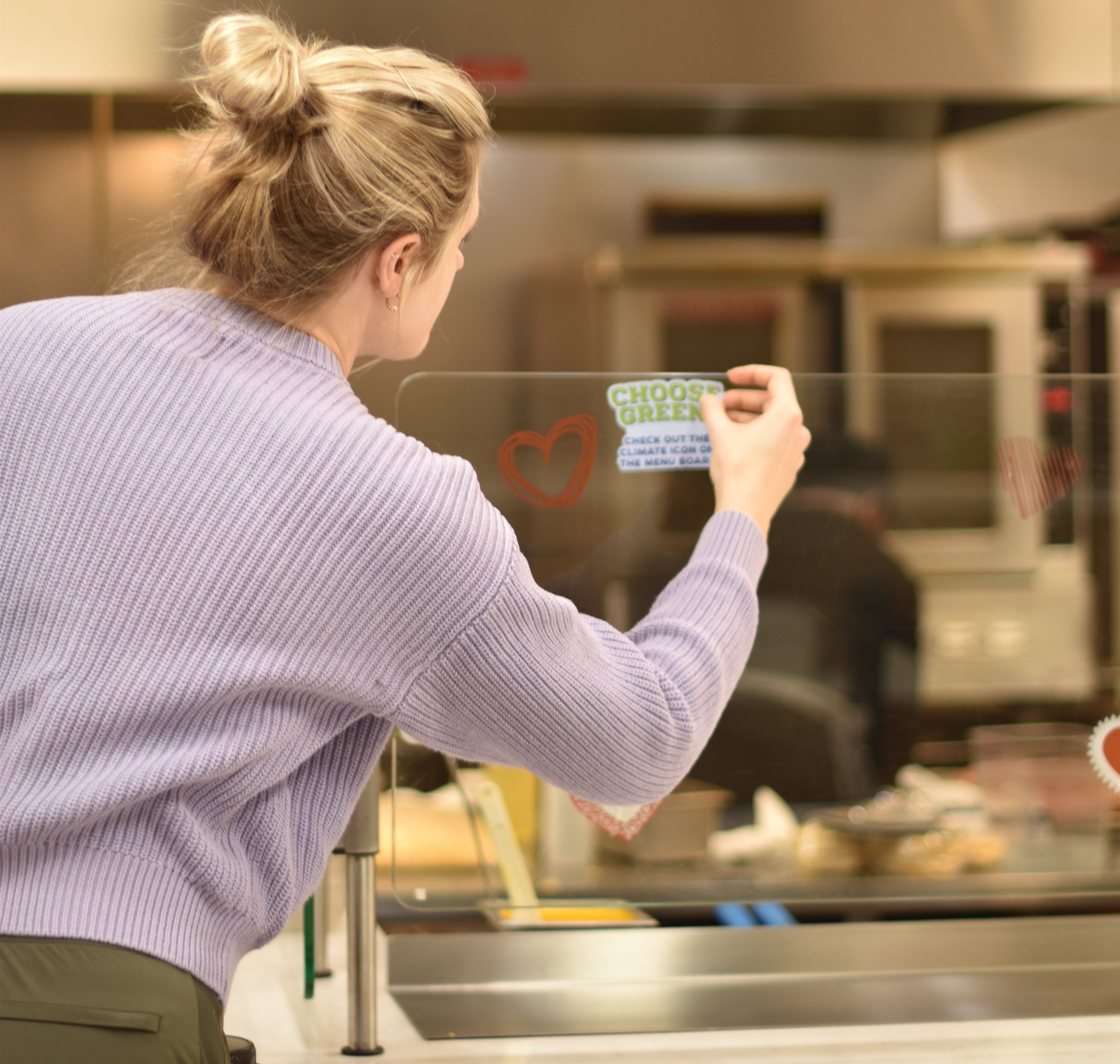
Hopkins Dining staff placing behavioral prompts for a Campus as Living Lab project.

In collaboration with Hopkins Dining, Whiting School of Engineering students received the Dean’s Design Award for Undergraduate Engineering Design at JHU’s annual Design Day event for their project SCRAPS: System for Compost Reporting – Automatic Plate Waste Statistics. The team developed a data-driven solution that automatically collects and processes compost weights from post consumer plate waste in campus dining halls. This tool will allow Hopkins Dining to more accurately and regularly measure post-consumer plate waste separately from back-of-house pre-consumer waste leading to:
- More informed purchasing and operational decisions
- Improved continuity and classification of compost statistics
- Data driven messaging to students to make more responsible choices
GOAL 9. Foster a Culture of Responsible Procurement
JHU is working to build a culture of sustainable and responsible procurement across our schools and divisions, including surveying practices across the industry and developing a sustainable procurement framework.
Adopt sustainable procurement practices and education
JHU has plans to develop sustainability procurement guidelines, educate and engage university buyers, and work with vendors to increase sustainable products and services
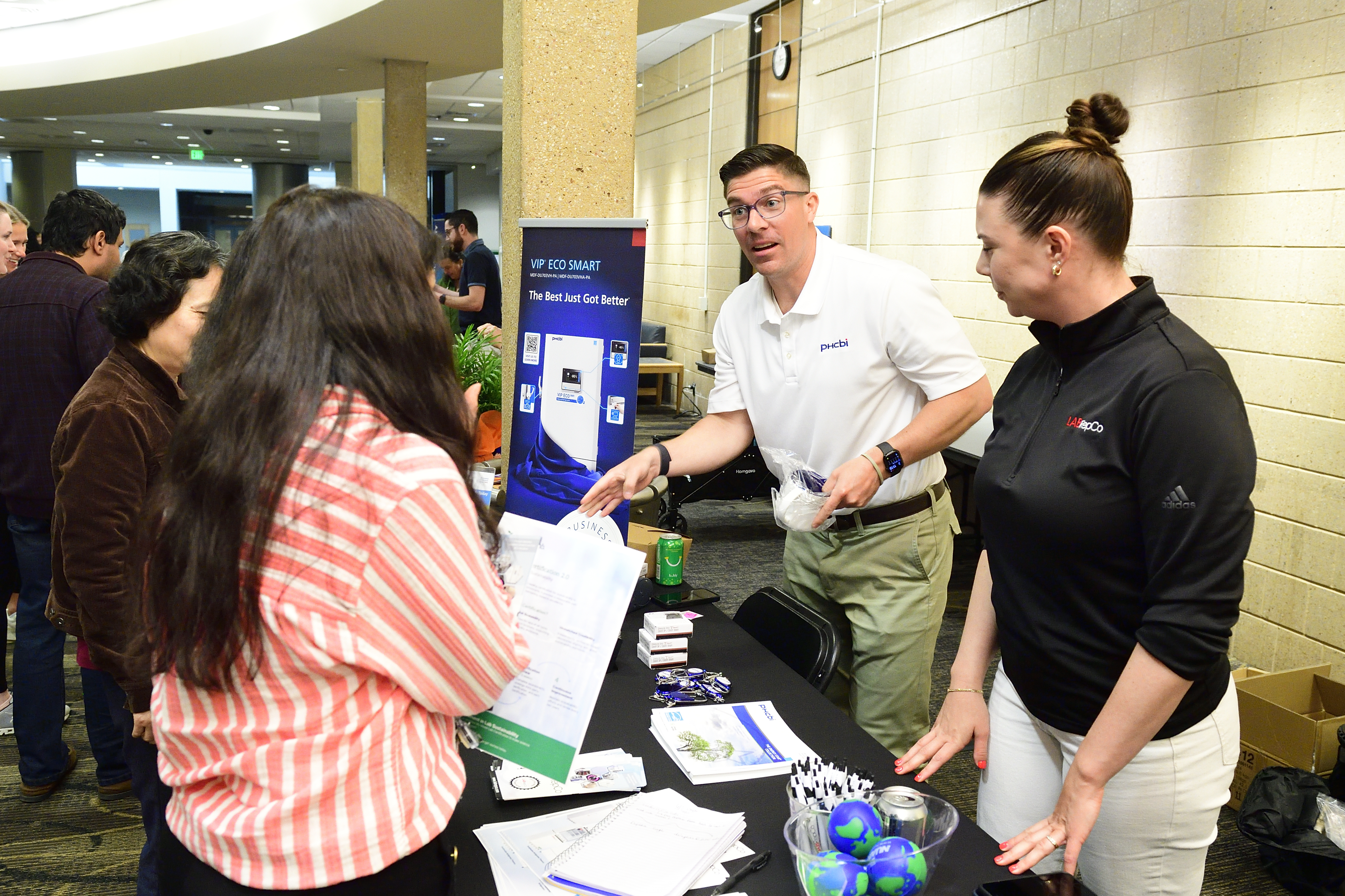
Vendors and staff speaking at the Green Labs Vendor Fair.
JHU’s Procurement Office, in coordination with OCS and APL’s procurement team, will work with suppliers and university stakeholders to identify and promote products and processes that increase sustainable procurement, including:
- Drafting sustainable procurement guiding principles to inform JHU departments
- Developing sustainability standards for targeted spend categories
- Creating educational guidance to inform university buyers
- Assessing vendor sustainability commitments and leveraging platforms to promote sustainable products and services

Explore More About Responsible Consumption at JHU
Learn more about the university’s commitments in our Climate Action and Sustainability Plan.