Transportation accounts for 25% of Baltimore’s greenhouse gas emissions and is a primary contributor to regional air quality, making the reduction of these emissions a critical component of JHU’s action on climate and environmental justice.
To guide emissions reduction efforts, JHU commits to aligning with regional priorities to transition to zeroemission vehicles over the coming decade. Achieving these goals will be greatly supported by the rapid shift of the transportation sector toward electrification, with new models of light and medium/heavy duty electric vehicles entering the market. As a highly visible extension of the institution throughout the region, the electrification of JHU’s own fleet can serve as a powerful signal of the university’s commitment to sustainability, to be supported by an expanding charging infrastructure network.
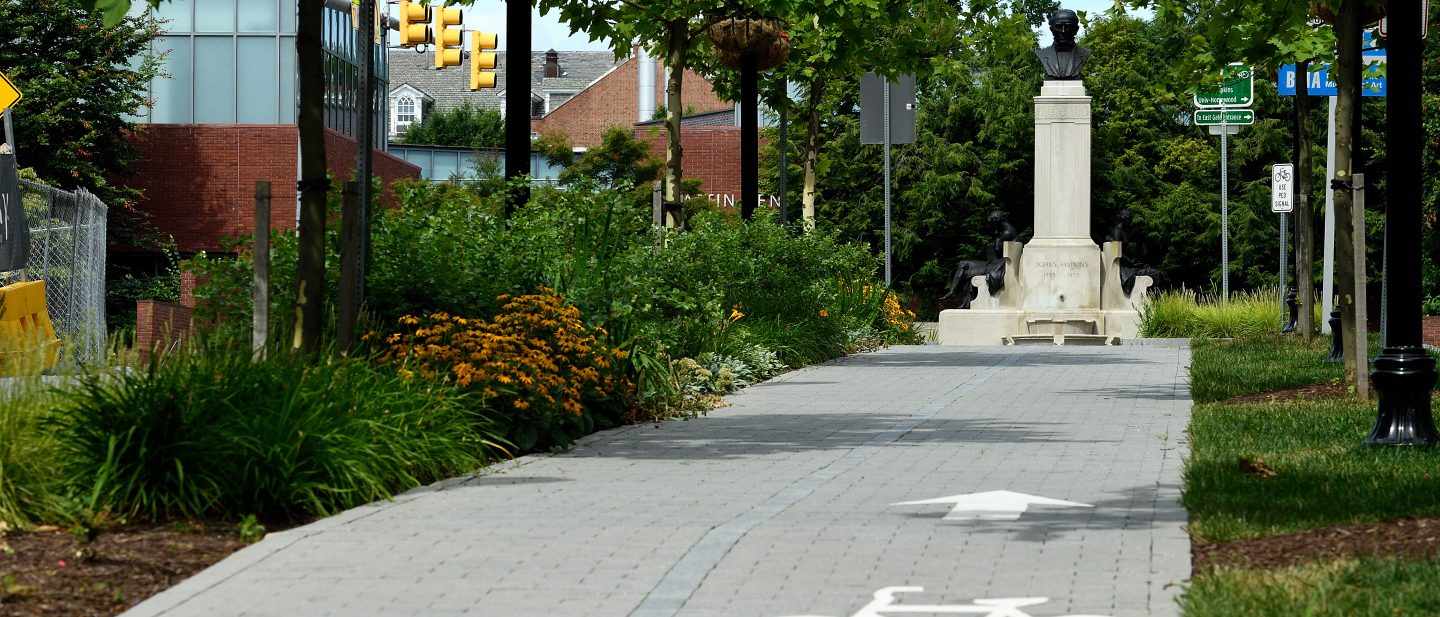
JHU also recognizes that supporting sustainable transportation options such as biking, public transit, and other modes has multiple benefits beyond reducing emissions, including enhancing health and well-being, reducing traffic congestion, and improving local air and noise quality.
 GOAL 10. Increase the Use of Sustainable Transportation to Reduce Emissions and Improve Health and Well-Being
JHU intends for all newly purchased light duty and passenger vehicles to be all-electric by 2030. The university is working to reduce greenhouse gas (GHG) emissions and parking demand from single occupancy vehicles, and also aims to expand partnerships to increase the use of sustainable transportation regionally.
Expanding Electric Vehicle Fleet and Infrastructure
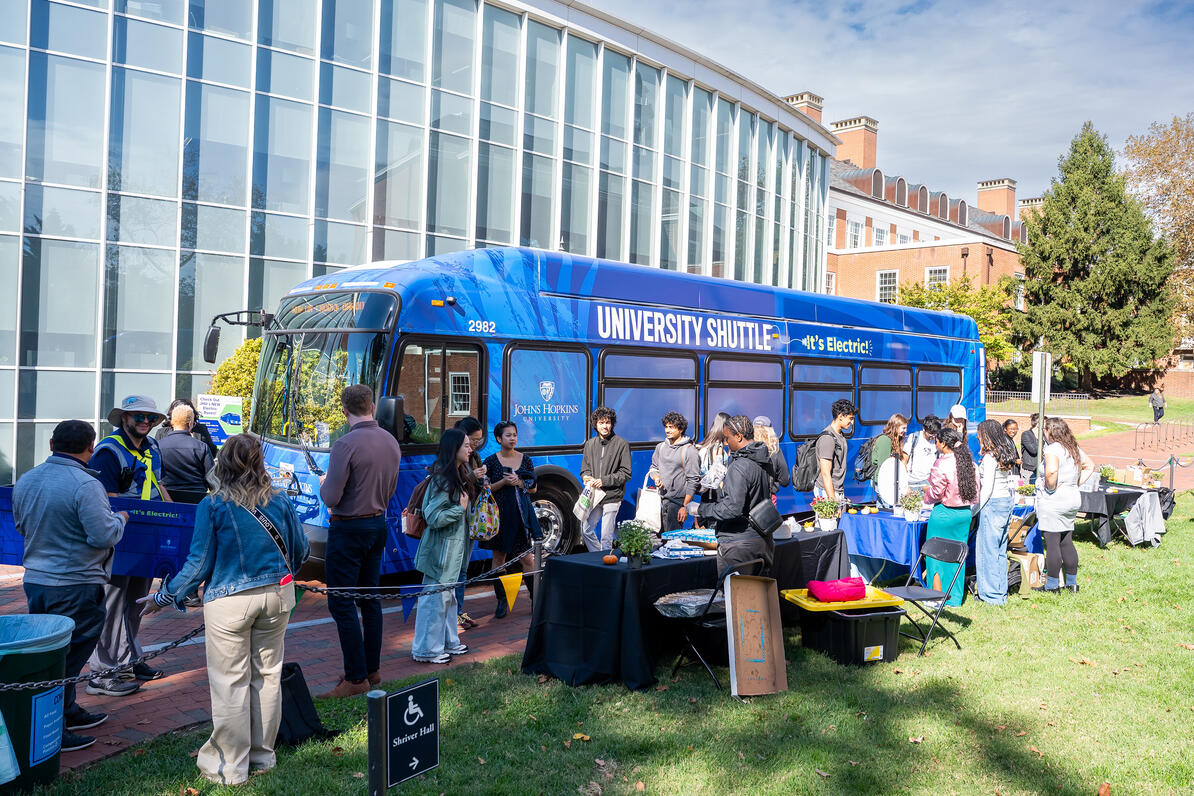
Beginning in 2024, half of the Homewood-Peabody-JHMI shuttle fleet will be converted to electric buses, with a full electrification of JHU’s largest shuttle fleet by 2026. This transition was part of an analysis by members of the Sustainability Leadership Council’s Green Fleet Working Group, which compared modern diesel to electric vehicle options using a carbon price and life cycle cost analysis. Full conversion of the bus fleet to electric vehicles will significantly reduce JHU’s greenhouse gas emissions associated with transportation, while improving regional air quality and lessening noise pollution in surrounding neighborhoods.
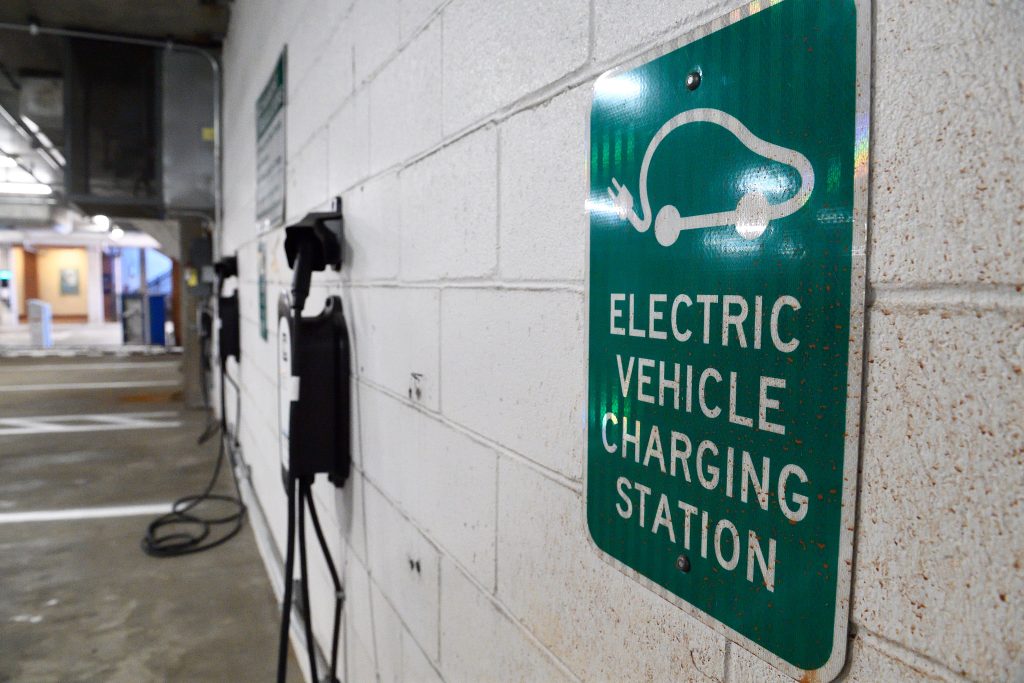 To encourage the use of low- and zero-emission vehicles, JHU’s Transportation Services Team launched a program in 2021 offering grants to university departments for the purchase of electric and hybrid vehicles. Departments can receive $4,000 towards a hybrid vehicle and $5,000 for the purchase of an electric vehicle. The program was established to help incentivize sustainable alternatives to internal combustion cars, trucks, and vans across the university. Only vehicles that are registered or titled by JHU are eligible to receive funds.
Reducing Emissions and Increasing Alternative Transit Usage
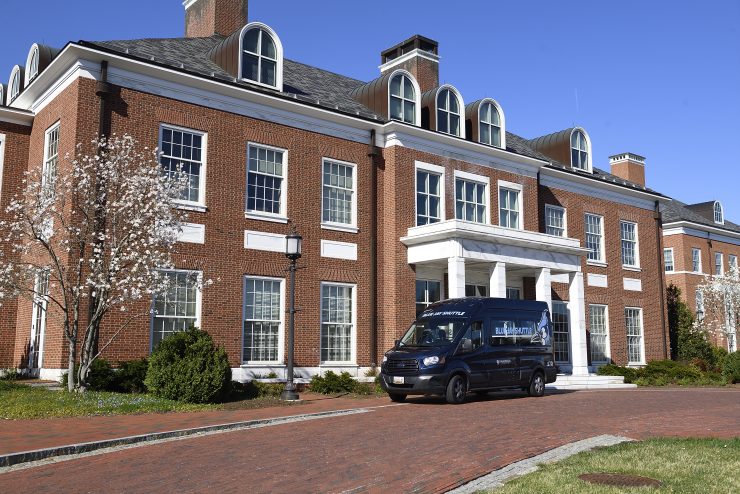
Blue Jay Shuttle System
The JHU Transportation Services team operates a free network of shuttles and buses, minimizing the need for single occupancy vehicles and resulting in emissions reductions, air quality improvements, and decreased runoff pollution. Visit JHU’s Transportation Services for information on shuttle routes, schedules, and more.
JHU Employee Benefits

JHU, in partnership with Baltimore City and the state of Maryland, offers a Live Near Your Work Program to assist eligible employees with down payment and/or closing costs for homes in designated neighborhoods near the Homewood, East Baltimore, Peabody and Bayview campuses. This program incentivizes employees to live close to their employer, thereby reducing emissions associated with commuting.
 JHU also offers employees a Commuter Assistance program that allows pre-tax deductions taken from your pay to cover eligible public transit or parking expenses associated with your commute. This program is available to full- or part-time faculty and staff.
 As of 2023, JHU offers a new and expanded public transit subsidy to eligible JHU employees who work in Maryland and Washington, D.C. This transit subsidy is intended to lessen the cost of commuting, support the university’s sustainability goals, and encourage the in-person interactions that are so important for achieving JHU’s educational, research, and service missions.
Building Regional Partnerships
The university continues to build on regional partnerships with governmental, advocacy, and community organizations to advance common transportation goals, including with the City of Baltimore, Maryland Department of Transportation, Central Maryland Transportation Alliance, Baltimore Transit Choices, and others.
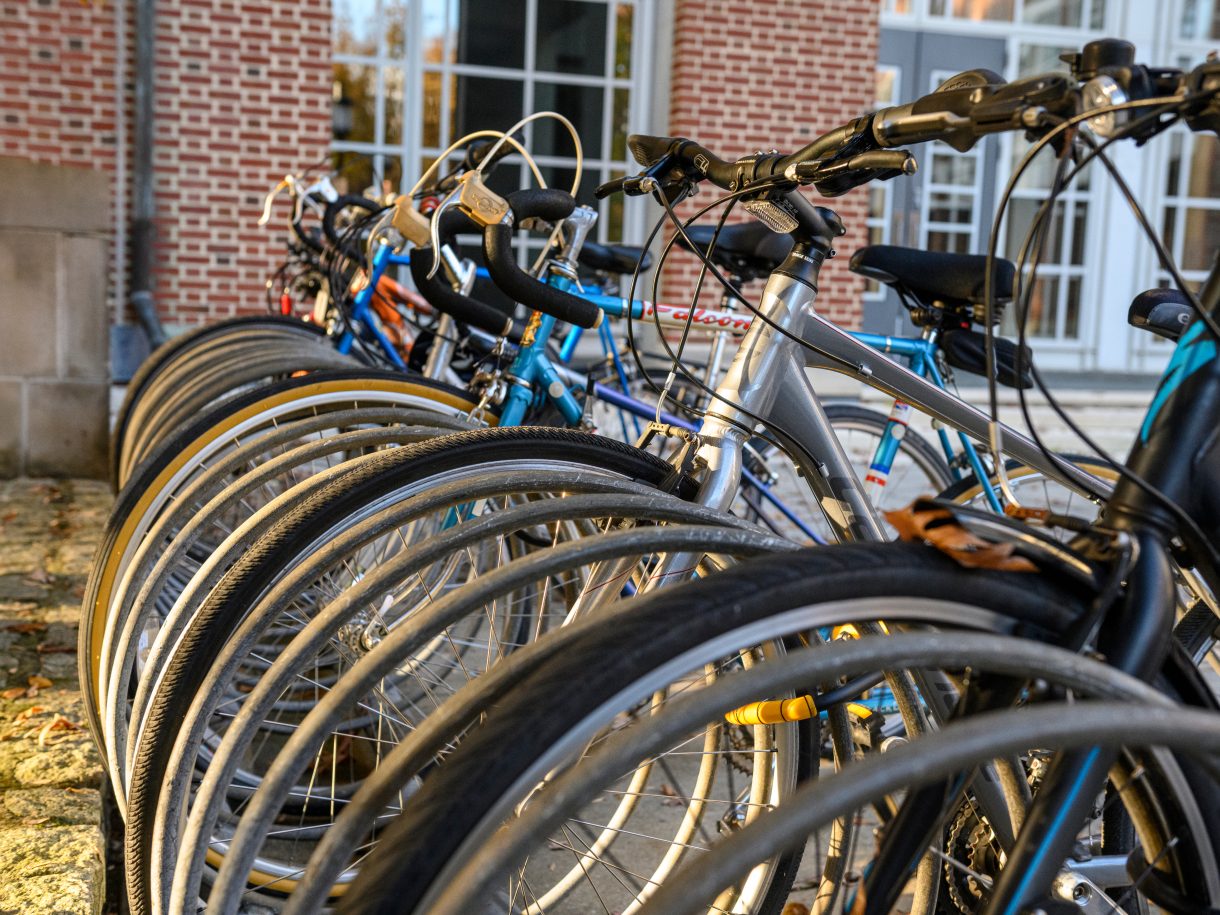
Interested in Travelling More Sustainably?
Visit our Travel Sustainably page for tips and information on how to green your commute including bicycling, mass transportation, and more.