Leading In Development of Innovative Climate Solutions
Climate change, alongside other accelerating environmental stressors, poses daunting sustainability challenges for human health, security, and inclusive well-being. These challenges are at once global in scope and highly localized in impact, where local economies, communities, and marginalized groups are often at greatest risk. Importantly, these challenges are not amenable to singular technological or policy solutions. They are complex problems, in which stakeholders have radically different worldviews and different frames for understanding the problem, thereby demanding interdisciplinary solutions. Processes for building our collective knowledge, capacity, and solutions can matter as much as articulation of the problem itself.
As such, our goals for research, teaching, and scholarship are solutions oriented and build on JHU’s people-centered approach to knowledge. The world needs innovative, democratic, equitable, and durable solutions. JHU has the right combination of cross-disciplinary expertise, institutional ethos and reputation, and geographic position to be a leading source of much needed innovation—and to prepare its students and communities for a rapidly changing world.
 GOAL 1. Establish JHU As a Leading Source of Solutions in the Transition to a Low-Carbon, Healthy, and Resilient Future
To meet this goal, JHU aims to accelerate cross-disciplinary collaboration for planetary health and environmental justice, locally and globally. The university also seeks to develop transformative innovations in climate science and energy systems.

Sustainability Research Directory
Researchers from across Johns Hopkins University are working in energy, climate, and environmental science to answer questions and find solutions to some of today's most pressing issues.

Johns Hopkins Institute for Planetary Health (JHIPH)
JHIPH, launched in April 2024, aims to accelerate cross-university collaboration in addressing the degradation of Earth’s natural systems and its impacts on human health and well-being. JHIPH’s mission is to catalyze scholarship and practice of Planetary Health by bringing together a community of faculty, students, and staff united by their commitment to work across disciplines to address the urgency of the Earth crisis and its impacts on humanity.

Ralph O’Connor Sustainable Energy Institute (ROSEI)
Based in JHU’s Whiting School of Engineering, ROSEI is the university’s focal point for energy-related research and educational programs. Founded in 2021, ROSEI brings together the extensive energy-related activities already underway across the university and focuses on developing an impactful program to address the transformation of the energy sector to help address climate change.
GOAL 2. Develop the Next Generation of Climate and Sustainability Leaders
The university hosts transformative programs in multiple sustainability-oriented fields, including undergraduate and graduate degree programs and outreach programming. JHU is also committed to ensuring that sustainability thinking infuses the academic experience, such that every JHU student can think critically about sustainability, knows what JHU is doing to advance sustainability, and has opportunities to actively participate.
Campus as a Living Lab
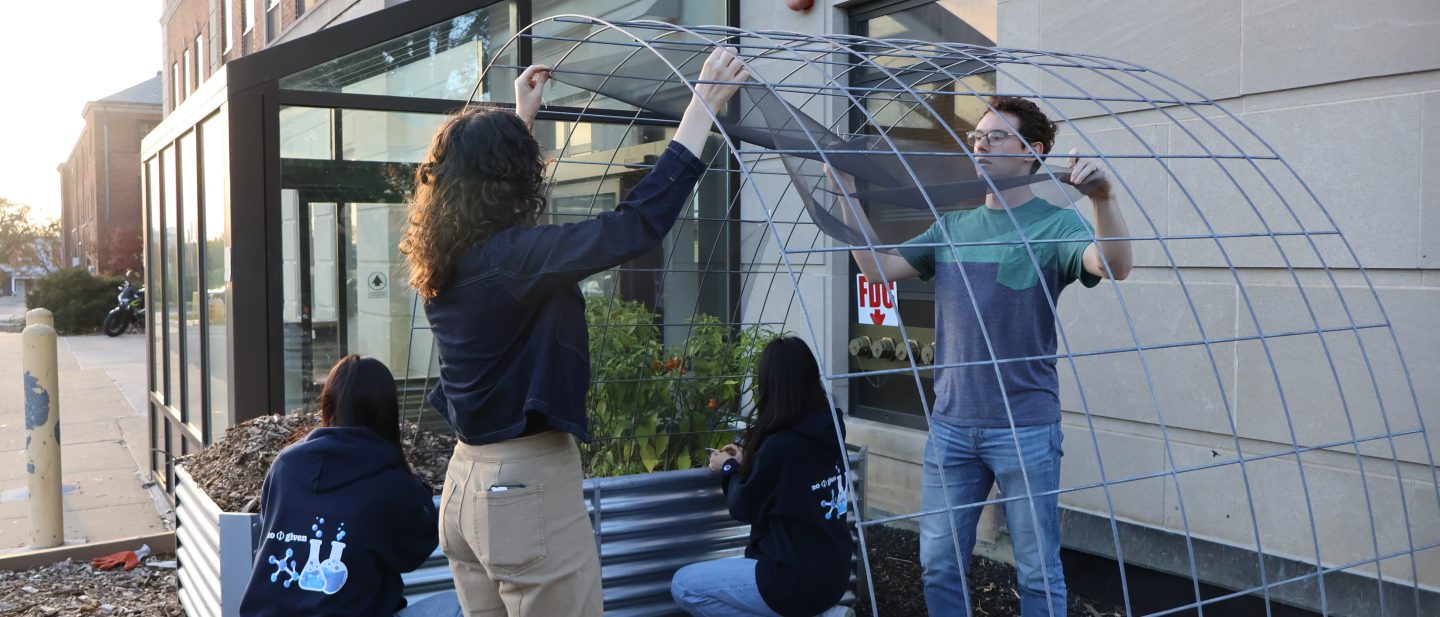
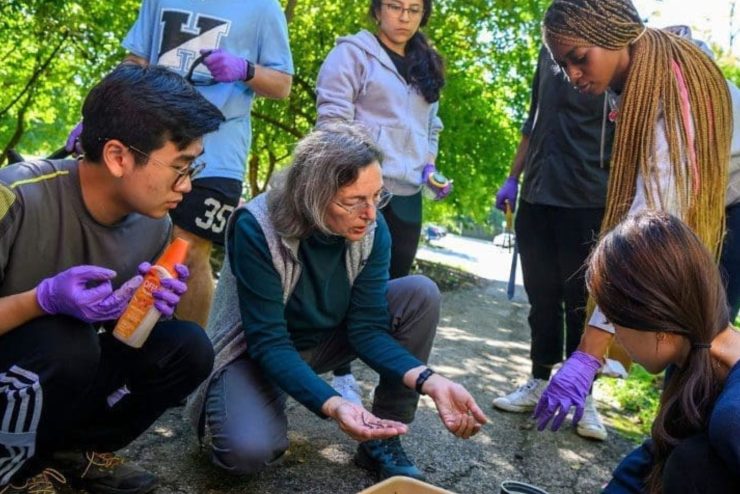
To support the plan’s priorities spanning research, teaching, and operations, Johns Hopkins University's Campus as a Living Lab program was launched in early 2024. The program seeks to foster a culture of on-campus sustainability innovation by bringing together researchers, instructors, students, and staff to test sustainability solutions using JHU’s physical campuses as learning tools.