
Transportation & Mobility
JHU is committed to implementing sustainable, multimodal transportation solutions that reduce emissions, lessen air and noise pollution, and support the health and well-being of our community. The university saw progress in numerous areas over the past year, building on existing initiatives like JHU’s public transportation commuter subsidy and Live Near Your Work programs, which support alternative transportation and proximity to work.
GOAL 10. Increase the Use of Sustainable Transportation to Reduce Emissions and Improve Health and Well-Being
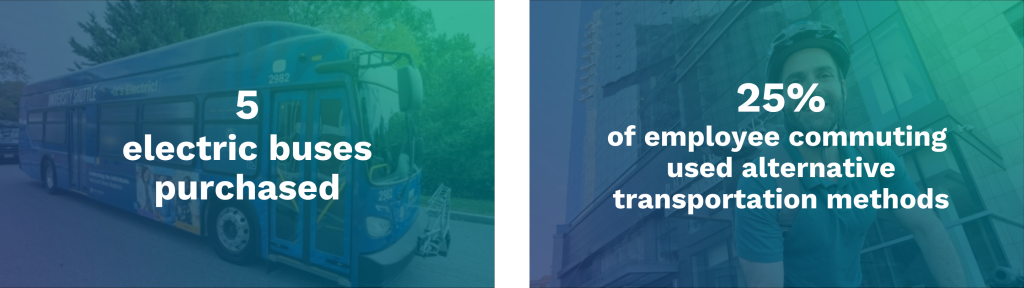
Over the past year, the university has made major strides to advance its sustainable transportation goals—including the purchase of JHU’s first electric buses, planning studies to inform vehicle electrification and charging needs, and the completion of the second transportation survey on university commuting trends. These efforts, among others, position JHU to meet its sustainable transportation goals in the coming years.
All newly purchased light-duty and passenger vehicles will be all-electric by 2030
As part of JHU's decarbonization plans, the university will electrify its vehicle fleet to reduce emissions and lessen air and noise pollution in surrounding communities.
24% of new light-duty and passenger vehicle purchases were electric or hybrid
Methodology: Vehicle fleet is tracked using annual purchases and categorized by engine type (electric, hybrid, or gas/diesel), make, and model.
Notes:
- Light-duty and passenger vehicles include cars, minivans, SUVs, vans, and some pickup tricks
- JHU’s electric buses are heavy-duty vehicles, so not accounted for in the graph above

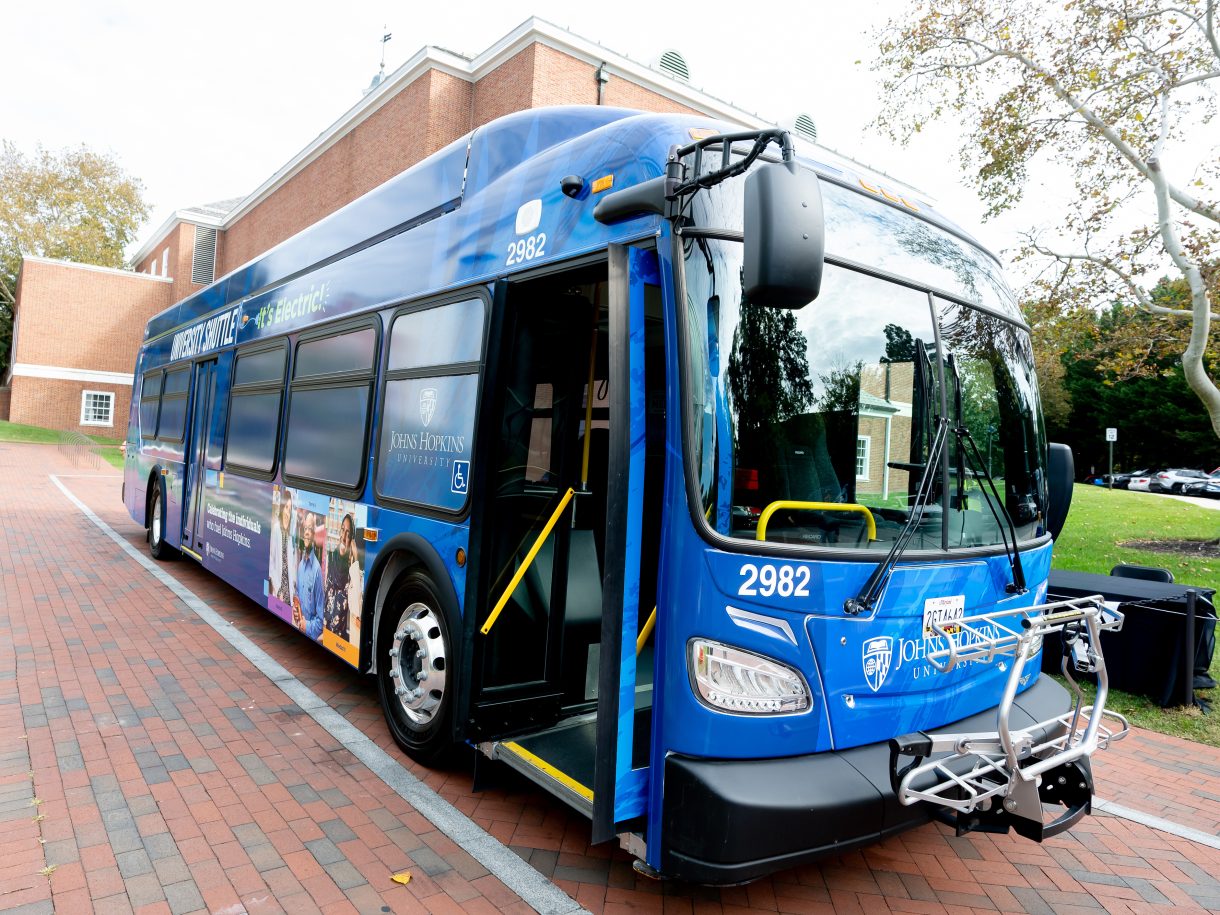
JHU purchased five all-electric buses for the Homewood-Peabody-JHMI shuttle route, the busiest transportation route operated by the university.
- Half of the fleet is converted from diesel to electric, with the second half planned in coming years
- Each bus is estimated to reduce JHU’s transportation emissions up to
110 metric tons of GHG emissions annually - New buses will reduce air and noise pollution in surrounding communities
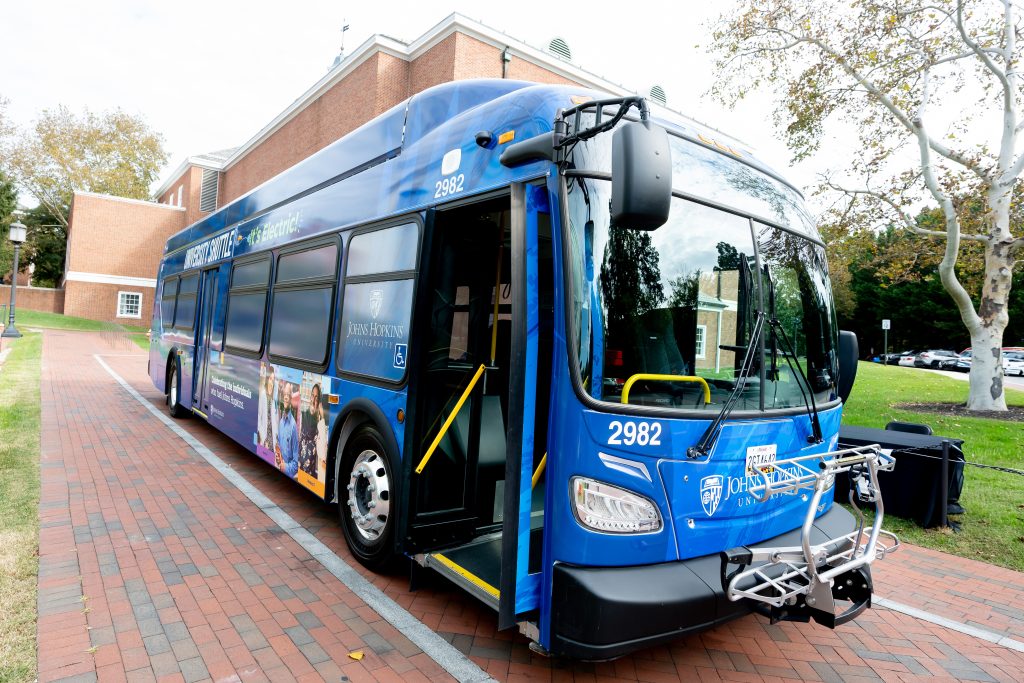

A study was conducted to assess charging options for JHU’s growing electric vehicle fleet at Baltimore campuses. The final location, located on the East Baltimore campus, will include covered parking to protect buses from the weather, increased electrical capacity to meet the electricity demand of the buses, and space to accommodate the chargers themselves.

The Applied Physics Laboratory (APL) was accepted into the Baltimore Gas & Electric fleet assessment program, resulting in a 10-year plan to convert their vehicles to all-electric. In addition, APL secured grant funding for the first round of chargers and purchased the first electric vehicles for its fleet.
Reduce greenhouse gas emissions and parking demand from single-occupancy vehicles
JHU continues to encourage sustainable commuting habits as part of its overall sustainable transportation strategy.
Alternative commuting practices have increased among JHU employees since 2022
Methodology: Data collected using JHU’s Transportation Survey distributed in Fall 2024
Note: Alternative commuting is the practice of using modes of transportation other than driving a single-occupancy vehicle to work or school. Telecommuting is not an alternative form of commuting.

JHU buses, shuttles, and vans provided over 1.5 million rides this past year.
The second iteration of JHU’s Transportation Survey was distributed in 2024 to analyze employee and student commuting patterns.
- Over 3,000 responses were received from across the university
- Among other findings, 25% of employees commuted using alternative transportation methods, marking an increase from the previous survey in 2022

A newly launched JHU Wayfinding App supports pedestrian travel on the Homewood campus.
- Developed in partnership with the Institute for Human Centered Design and JMT Technology Group
- Designed to address a wide range of accessibility and navigation needs and to promote walkability
Expand partnerships to increase the use of sustainable transportation regionally
As Maryland's largest private employer, JHU is poised to contribute to impactful transportation partnerships working with local governmental agencies and NGOs.
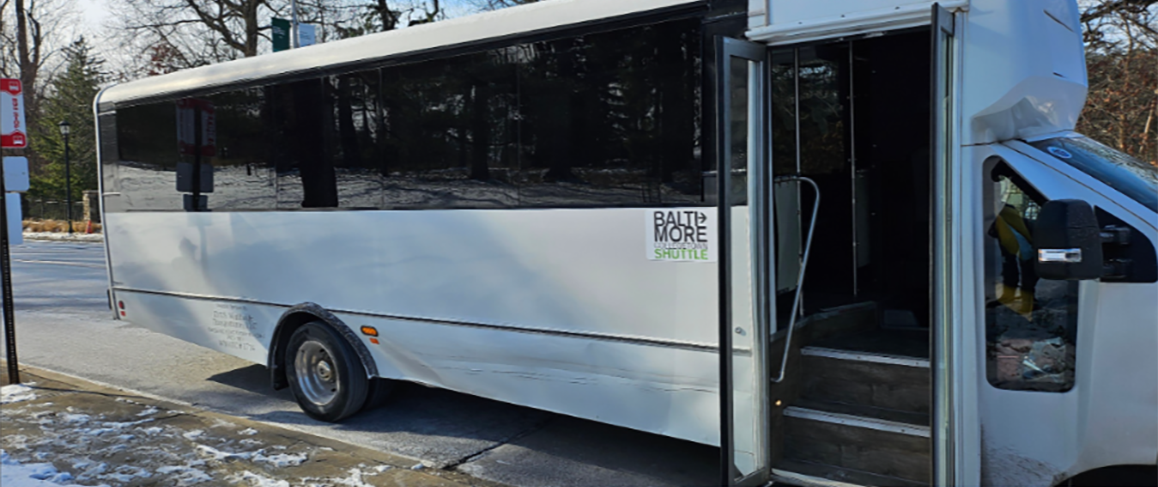
The Baltimore Collegetown Shuttle, one of JHU’s local transit partners.

Johns Hopkins University is working to sustain and broaden partnerships to increase the use of sustainable transportation in the region.
- JHU is represented in local transit groups, including the Central Maryland Transportation Alliance and Baltimore Transit Choices, aimed at improving and expanding transit options in Baltimore and beyond
- The university’s shuttles and buses connect employees and students to a wide range of local public transit options
- APL is supporting Howard and Montgomery Counties in their efforts to expand Montgomery County’s Flash Bus service into Howard County—bringing limited-stop bus service and providing a direct connection between APL and Silver Spring metro station
- APL continues to operate and has recently expanded a staff shuttle going to the Laurel MARC station (Camden Line)
- The Baltimore locations benefit from improved connections with public transit options as well, with new or more frequent trips to Union Station and to the light-rail.
Explore More About Transportation & Mobility at JHU
Learn more about the university’s commitments in our Climate Action and Sustainability Plan.