-
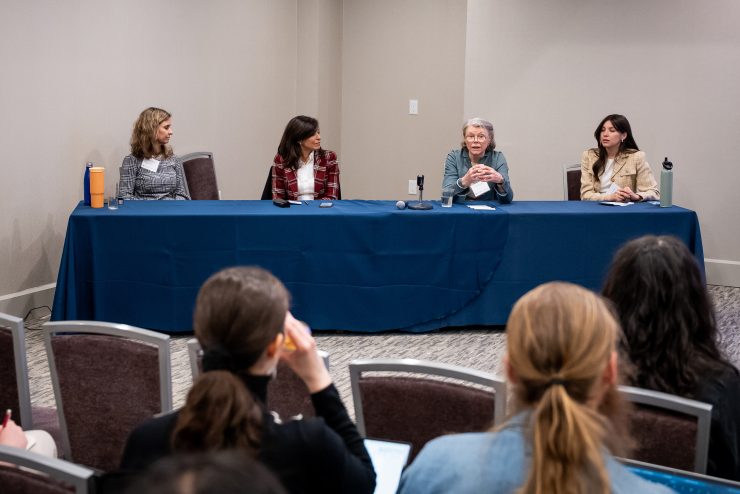
Presentations & Sessions
Concurrent sessions throughout the day from 9 AM – 4 PM will include series of speakers, panel discussions, and workshops. All sessions will include an opportunity for Q&A.
-
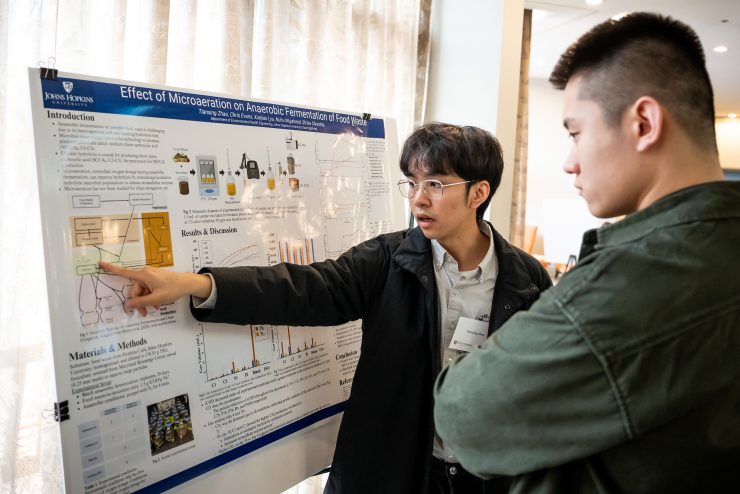
Research Posters
Research posters will be on display throughout the day, including during breakfast, lunch, and breaks. Researchers will be present to talk with attendees during afternoon breaks: 2:20 – 3 PM and 4 – 5 PM.
-
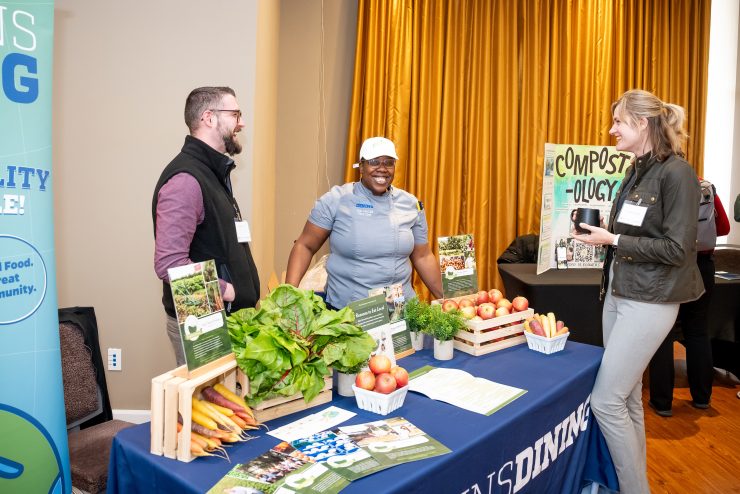
Informational Tabling
JHU groups, programs, centers, institutes, and departments will host informational tables at the symposium. Representatives will be available to talk to attendees during afternoon breaks: 2:20 – 3 PM and 4 – 5 PM.
In this 50-minute session, the Bloomberg Center for Public Innovation at Johns Hopkins (the Center) will highlight how graduate students are supporting local governments in advancing climate and sustainability goals through community-centered approaches. The session will feature two Summer Scholars whose work focused on climate, environmental sustainability, and community engagement. Their projects include strengthening public-private-community partnerships to address environmental and economic impacts linked to legacy industries, as well as developing communication strategies to encourage sustainable waste behaviors at the neighborhood level.
Moderator: Cory J. Anderson is Program Manager for Experiential Learning at the Bloomberg Center for Public Innovation, where he leads the Summer Scholars Program placing JHU graduate students in city government. With over 20 years of experience in higher education and nonprofits, he is passionate about developing emerging leaders and strengthening communities.
Speakers:
- Krithiga Narayanan is a Public Service Fellow and M.A. candidate in International Relations at Johns Hopkins SAIS, specializing in governance and strategy in Asia. A multidisciplinary journalist and storyteller, she works across research, policy analysis, media, and environmental storytelling to capture and share compelling narratives.
- Vandana Yadav works at the intersection of public policy, communications, and institutional strategy, helping mission-driven organizations translate research into action. With over 13 years of experience across India and the U.S., and training in engineering, journalism, and public policy at Johns Hopkins SAIS, she focuses on how emerging technologies reshape institutions and governance.
Did you know that in 2024, JHU launched the first cross-university Institute for Planetary Health? Since then, the Institute has brought together experts from multiple disciplines to understand and address how changes to Earth’s natural systems are affecting human health worldwide. The team has launched multiple interdisciplinary research hubs, expanded Planetary Health education across divisions and departments, founded a policy program, and grown the Planetary Health community across JHU, with more than 290 affiliated staff and faculty. The Institute also includes the affiliated Planetary Health Alliance, the backbone community of practice for the field of Planetary Health, which aims to accelerate the global Planetary Health movement. JHIPH is a core component of JHU’s Climate Action & Sustainability Plan. Two years in, come hear reflections on the journey so far and how JHU is leading the way in Planetary Health, and contribute to conversations about what should be next. There will be plenty of time for Q&A, organized around asking the audience to reflect on where and how JHIPH can most effectively continue to advance the Planetary Health/sustainability agenda going forward – both within JHU, and beyond.
Moderator: Rachel Marcus is the Executive Director for the Johns Hopkins Institute for Planetary Health (JHIPH) and the Planetary Health Alliance (PHA), and an Associate Scientist in the Johns Hopkins Bloomberg School of Public Health, Department of Environmental Health and Engineering. She manages two dynamic teams focused on building a Planetary Health community at JHU and growing the global Planetary Health community and movement. Dr. Marcus previously worked for many years at USAID where she managed a portfolio of multi-sectoral population health programs across 65 countries worldwide.
Speakers:
- Jessica Kronstadt is the Program Director at the Planetary Health Alliance (PHA), which supports more than 550 member organizations addressing global environmental changes and their health impacts. In this role, she oversees PHA’s interconnected programs, ranging from community building and partnerships to education and mainstreaming Planetary Health in the global community. Prior to joining the alliance, she engaged in research, evaluation, and program development to strengthen public health infrastructure.
- Ben Zaitchik is a Professor of Earth and Planetary Sciences at Johns Hopkins University. He studies fundamental climate processes and applies this knowledge to problems of social concern. In this context, he leads several projects on the propagation of climate stresses through complex natural-human systems, including work co-designed with community members. Prior to joining Johns Hopkins, Dr. Zaitchik worked as a Research Associate at NASA and a AAAS Fellow at the US Department of State.
- Alex Phelan is Associate Professor in the Department of Environmental Health and Engineering at the Johns Hopkins Bloomberg School of Public Health, Senior Scholar at the Johns Hopkins Center for Health Security, and Faculty Director (Policy) at the Johns Hopkins Institute for Planetary Health. Dr. Phelan is an internationally recognized expert in global health law, specializing in international law and infectious diseases and the impact of global change events on health, including planetary health issues like biodiversity and climate change. She/they advises international organizations and governments on pandemic prevention, preparedness, and response, and has been involved in several multilateral treaty negotiations, including the WHO Pandemic Agreement, amendments to the International Health Regulations, and High Seas Treaty.
In this session, participants will hear from Office of Climate and Sustainability staff about their approaches to developing meaningful policy in support of JHU’s Climate Action & Sustainability Plan goals for building design, zero waste, and green labs.
Speakers:
- Agathe Pierot leads the collection, analysis, management, and communication of data and metrics. She provides analytic support for all sustainability projects with data-related needs. She has over eight years of experience working on sustainability issues, especially as they pertain to energy efficiency in buildings and sustainable investments. She became passionate about campus sustainability in her previous role at the Yale Office of Sustainability. She holds a Master’s in Finance from EDHEC Business School.
- Leana Houser is the Sustainability Manager, Zero Waste who works to engage all members of the Johns Hopkins community in reducing the generation of waste and encouraging the responsible reuse and recycling of materials. Her dedication to protecting the health of the environment and the people in it began during her camping excursions every summer as a child and carried through to rural St Mary’s College of Maryland, where she earned a BA in Public Policy. Leana continues ever stronger as a proud resident of Baltimore City and has been committed to sustainability issues for her entire career at Hopkins, which began in 2003, including receiving her Master’s in Environmental Science and Policy from the JHU Advanced Academic Programs.
- Ryan Weeks-Rutan works to make all research labs at Johns Hopkins more sustainable through individual behavioral changes and institution-wide initiatives. Ryan holds a B.A. in Biochemistry and Mathematical Sciences from Colby College and recently defended his PhD thesis in Chemical Biology at Johns Hopkins University. His work with sustainability began during his PhD research when he helped begin the JHU Green Labs program.
The Office of Climate and Sustainability is on the cusp of launching a new engagement program geared towards all Hopkins affiliates. Come be among the first to learn about the program structure and more importantly share your feedback with us. Bring your ideas and energy!
Speaker: Claire Runquist is the Senior Sustainability Specialist for Engagement and Community-Building. She’s been at JHU for 2 years and is passionate about bringing people together to collectively solve sustainability challenges.
Consumers represent a key leverage point to affect food systems change. National surveys and public opinion polling are useful tools for gauging public attitudes, behaviors, and perceptions. They can help policymakers, public officials and researchers study acceptance or resistance to health interventions, policies, and messaging. They can track public sentiment for fast moving topics and changes over time. Results are also widely accepted by politicians and policymakers to understand their constituents and can be readily picked up by the media.
In this session, researchers from the Center for a Livable Future will cover the fundamentals of public opinion polling, how findings are communicated, and strategies for using public opinion data for advocacy and message framing. We will use findings from recent polling and national studies related to American perceptions of a variety of food systems and sustainability issues to illustrate how polling can generate useful insights to inform action.
Moderator: Liz Nussbaumer directs the Aquatic Food Systems & Public Health focus area at the Center for a Livable Future, which explores the role of aquatic foods in transitioning the food system away from harmful industrial models of production. Together with her team, the focus area engages in research, public policy, practice, and education to highlight the importance of aquatic foods for public health, planetary health, and food systems.
Speakers:
- Patti Anderson, MPH, PhD is the policy director at the Johns Hopkins Center for a Livable Future and an Assistant Practice Professor in the Department of Environmental Health and Engineering at the Bloomberg School of Public Health. Her research and practice portfolio includes efforts to understand Americans’ perspectives on food and agriculture issues, as well as efforts to advance public policies that support the health of people and the planet.
- Dr. Andrew Thorne-Lyman is an Associate Professor in the Program in Human Nutrition and the Center for a Livable Future at the Johns Hopkins Bloomberg School of Health. He is a nutrition epidemiologist by training, and his research aims to identify sustainable food-systems solutions to improve the nutritional status and health of vulnerable populations globally and in the United States.
- Becky Ramsing leads the Center for a Livable Future’s Meatless Monday and Sustainable Diets focus area. Her team is committed to research, communication, and practice to help facilitate the shift toward sustainable, healthy diets globally.
Moderator: Ben Zaitchik is a Professor of Earth and Planetary Sciences at Johns Hopkins University. He studies fundamental climate processes and applies this knowledge to problems of social concern. In this context, he leads several projects on the propagation of climate stresses through complex natural-human systems, including work co-designed with community members. Prior to joining Johns Hopkins, Dr. Zaitchik worked as a Research Associate at NASA and a AAAS Fellow at the US Department of State.
10:00-10:15: Baltimore Community Weather Network
- PANEL OF SPEAKERS; RESEARCH-FOCUSED
Quantification and understanding of how heat, rainfall, and air quality vary within cities are needed to identify the area with the worst conditions, develop solutions to extreme weather, and assess the impact of proposed policies. However, neighborhood-level variability is not well quantified because there are few environmental measurement stations within cities. The Baltimore Community Weather Network (BCWN), a university, city, and community partnership, is addressing this issue by deploying a network of community-based weather instruments to measure the weather across Baltimore City. The weather stations are hosted by community partners, and the data collected are enabling the mapping of urban weather across the city and the testing of models and proposed mitigation strategies. In addition, the network provides direct community involvement, with resulting benefits of increased community engagement, education, and empowerment.
Speaker: Darryn Waugh is a Professor in the Department of Earth and Planetary Sciences at the Johns Hopkins University. His research interests include understanding global environmental issues such as stratospheric ozone depletion, climate change, air quality, and urban climate.
10:17-10:32: Pedaling Through the Heat: Mobile Sensing for Urban Temperature Mapping
- STUDENT PRESENTERS; RESEARCH-FOCUSED
Extreme heat is one of the most pressing climate risks in cities, yet its impacts can be highly uneven across neighborhoods. Capturing this fine-scale variability requires both continuous monitoring and detailed spatial coverage. However, most urban sensor networks are too sparse to resolve local hot and cool zones. To better capture and understand this spatial complexity, we combine two complementary sources of data: a dense network of weather stations and mobile measurements collected with bike-mounted sensors along multiple rides in Baltimore, Maryland. The mobile campaigns were conducted at two diurnal extremes-early morning near the daily minimum temperature and late afternoon near the daily maximum. Together, these observations provide a unique view of how temperatures shift across space and time. To translate these measurements into citywide heat maps, we apply machine learning models that link observed temperature values to land cover, surface properties, and topographic context. The resulting maps reveal patterns of spatial variation and highlight the added value of mobile campaigns. This approach demonstrates a cost-effective pathway for producing high-resolution urban heat maps that can inform adaptation and planning.
Speaker: Ali Eyni
10:35-10:50: Using Weather Stations for Education
- OPERATIONS-FOCUSED; RESEARCH-FOCUSED; DESIGNED FOR STUDENTS
The Baltimore Community Weather Network (BCWN)—originating from the Baltimore Social-Environmental Collaborative (BSEC)—is a community-based initiative that connects over 50 weather stations located at schools, nature centers, churches, and non-profit organizations across Baltimore City. Beyond collecting real-time, neighborhood-level weather data, the BCWN seeks to educate and inspire Baltimore youth to engage with local weather and climate through hands-on, place-based learning. Through listening sessions with partner schools, educators identified a strong need for educational materials to accompany the weather stations. In response, this project will develop and pilot a school weather education program that integrates STEM learning, data analysis, and communication skills. Through this research we aim to learn more about how students understand the weather at their school and how teachers are using the weather station in their classroom—and how we can increase inclusion and understand engagement. We want to see how using real weather data can potentially increase knowledge of weather and inspire continued engagement with weather and climate for youth.
Speaker: Molly Robey is a Ph.D. student in the Earth and Planetary Science department at Johns Hopkins University. She collaborates with the SPIEE lab as well as with Dr. Darryn Waugh on research initiatives through the Baltimore Social-Environmental Collaborative. Molly’s research areas include science communication, climate science, science education, and community engagement. She currently works as an assistant teaching professor of communication at Loyola University Maryland where she teaches communication courses as well as a meteorology course.
Across ecological, social, and institutional domains, “toxicity” has become a defining condition of contemporary life—manifesting as polluted air, soil and water, degraded landscapes, social alienation, and systemic inequities. The proposed panel brings together community-based practitioners working across environmental stewardship, healing arts, design, and the humanities to examine how locally grounded practices function as antidotes addressing both environmental and social toxicities. Panelists will share how their work addresses toxic conditions not only as physical contaminants, but as outcomes of extractive systems, historical exclusion, and imbalanced relationships between people and place. Panelist Samia Kirchner will discuss collaborative approaches for managing land and water rooted in commons-based traditions to enhance community resilience. Alyssa Dennis explores plant medicine, land stewardship, and creative practice as pathways toward embodied healing and relational living in a time of environmental dissociation and resource extraction. Inna Alesina will present invasive plant removal as an act of care and regeneration, restoring forest ecosystems and fostering reciprocal relationships with local landscapes. Siyu Xie will reflect on literary and philosophical traditions that document and interpret the natural world, illuminating how narrative and meaning-making shape our responses to ecological harm. Moderated by anthropologist and Ecological Design Collective curator, Nicole Labruto, this panel invites dialogue on how antidotes to toxicity operate across scales—from the embodied and local to planetary—and how redesigning structures and practices that produce harm can advance environmental justice and multispecies thriving. Together, the panel highlights community knowledge, interdisciplinary collaboration, and care-centered design as essential strategies for cultivating more livable futures.
Moderator: Nicole Labruto is a member of the Curatorial Circle of the Ecological Design Collective, Associate Teaching Professor and Director of the Medicine, Science, and the Humanities Program at JHU, and is the co-chair of the SLC Environmental Justice and Community Partnerships Committee. Working with bioscientists in Brazil, her work integrates the anthropology of science, environmental anthropology, and postcolonial studies to explore the intersection of life forms, landscapes, and labor in relation to postcolonial biologies. Nicole is involved in organizing and activism with a number of environmental justice organizations in Baltimore.
Speakers:
- Dr. Samia Rab Kirchner makes, studies, and analyzes architecture that contributes to urban civic identity, with a focus on the transformative role of water in the design and redevelopment of port cities. She currently teaches Urban Design at Morgan State University in Baltimore. As Community Engagement Lead on the Department of Energy grant-funded Baltimore Social-Environmental Collaborative (BSEC) and on the Maryland Sea Grant-funded Morgan BLUE-CORE projects, she is codeveloping new approaches for climate and coastal scientists to learn from residents of East, West, and South Baltimore, and collaboratively identify community priorities that guide research questions embedded in the community’s lived experiences.
- Inna Alesina is an earth-advocate, and also, a professor of Art and Graphic Design at Stevenson University, an author, a designer and a maker. Her work has merited over a dozen patents, numerous design awards, and has been highlighted by exhibitions, residencies, and workshops. 2018 Red Dot Design Award winner, Alesina works in many disciplines including object design, performance wear, ergonomics, communication design, food systems, and bio materials.
- Siyu Xie is a PhD candidate in the Department of Comparative Thought and Literature at Johns Hopkins University. Her research examines how writers in early modern China developed new ways of observing and describing plant bodies beyond traditional symbolic interpretations, drawing on poetry, essays, and encyclopedic books from the sixteenth to eighteenth centuries. She is a graduate fellow at the Ecological Design Collective.
- Alyssa Dennis is a dedicated earth activist, spiritual ecologist, educator, interdisciplinary artist, clinical herbalist, and is the founder of Eclipta Herbal. Her work centers on reclaiming land-based knowledge systems of plant medicine as a path toward ecological & community regeneration, personal vitality, and holistic health. She completed her clinical herbalism training at the Arbor Vitae School of Traditional Herbalism in New York, where she now serves as a clinic mentor, and is the steward of a vibrant herbal sanctuary in Baltimore City—a living classroom and gathering ground for plant medicine education, earth skills workshops, creative collaboration and community healing.
JHU endorsed the High-Performance and Healthy Buildings (HPHB) requirements in 2024, to integrate the university’s ambitious sustainability, health, and well-being goals in all campus building projects, including new construction, major renovation, and modifications. Through three exemplary case studies, this session will highlight how HPHB is integrated in projects at different scales, in spaces where students live and learn:
- The Wolfe St Building Study: In addition to foregrounding HPHB, faculty were engaged throughout the study development process and their research shaped strategies to be implemented in the building, especially related to health and wellbeing. Presented by Carly Hinton, Sustainability Manager, Bloomberg School of Public Health.
- The AMR I Kitchens: The new AMR I Kitchens are designed to be (almost) all electric, resulting in better air quality and reduced carbon emissions. Presented by Hamilton Goss, Director of Culinary Innovation, Hopkins Dining.
- Furniture, Finishes, and Lighting: This case study examines how interior design decisions influence the daily student experience. Presented by Lorena Permuy, Senior Director of Facilities, University Student Services. This session will be introduced and moderated by Agathe Pierot, Sustainability Manager for Climate Action at the Office of Climate and Sustainability.
Moderator: Agathe Pierot is the Sustainability Manager for Climate Action at Johns Hopkins University. In her role, she guides JHU towards meeting ambitious climate goals and implementing the new High Performance and Healthy Buildings Requirements. She also oversees sustainability data collection, analysis, and management for the University and is a key contributor to all strategic sustainability planning efforts. She has over ten years of experience working on sustainability issues, especially as they pertain to energy efficiency in buildings and sustainable investments.
Speakers:
- As the Sustainability Manager for the Bloomberg School of Public Health, Carly Hinton works to implement sustainability initiatives into each aspect of managing the School’s facilities and operations. She has over ten years of experience in the environmental and sustainability field. She holds a B.S. in Environmental Systems Engineering and is a WELL Accredited Professional.
- Hamilton J. Goss, CEC, CCA, has been a member of Hopkins Dining since the University transitioned to a self-operated dining program in 2021, and leads a team dedicated to supporting the mission and vision of Hopkins Dining. As the Director of Culinary Innovation, he focuses on the future of Hopkins Dining by staying on top of global trends, supporting local suppliers, and working with architects to design future dining spaces on campus. He started cooking in professional kitchens full-time at the age of fifteen and has been privileged enough to continue in this amazing industry with a focus on innovation and nourishing lives ever since.
- Lorena Permuy is Senior Director of Facilities, Planning & Design for University Student Services at Johns Hopkins University, where she leads planning, capital project development, and facilities initiatives supporting student-facing spaces across the university. Prior to joining University Student Services, she spent two years with Johns Hopkins Facilities & Real Estate working in Planning & Architecture on campus planning studies and capital projects. With nearly three decades of experience as an architect and planner, her work focuses on shaping campus environments that support the student experience.
JHU undergraduate students are curious about sustainability. This panel brings together collaborative, innovative pedagogical approaches to the Sustainability Lab course through a transnational partnership with the Danish Study Abroad School in Copenhagen, as well as local community partners, Laura Glaeser and Martha McApline, educators in movement and wellness practice, and art curator Carla Hanzel. Dr. Karimi and Dr. Jana Kopelent-Rehak will introduce their Sustainability research lab course, which explores sustainable initiatives in Baltimore and Copenhagen. Undergraduate student Eva Breiland will present her comparative research project from this course, addressing food systems in the US and Denmark. Laura Glaeser will discuss her engagement with JHU students in approaching individual, community, and ecological sustainability through nature-based movement and immersion practices. Martha McAlpine will speak about her health-focused pedagogical work through Yoga philosophy and practice, addressing human health holistically by considering ecological models. Carla Hanzel will present the upcoming environmental art exhibition, Earth on Fire, which she brings to the sustainability courses at JHU as a guest speaker. Together, our panelists will raise questions addressing innovative approaches to teaching sustainable values.
Moderator: Jana Hana Kopelent-Rehak, PhD, Senior Lecturer, Earth and Planetary Sciences, JHU
Speakers:
- Jana Kopelent Rehak, PhD, Senior Lecturer, Earth and Planetary Sciences, JHU
- Laura Glaeser, movement/health practitioner
- Martha Mc Alpine, movement/health practitioner
- Carla Hanzel, art curator and consultant
- Eva Breiland, undergraduate student, JHU
In this session, participants will explore the successes, challenges, and opportunities associated with values-based food procurement at universities in the Baltimore-Washington metropolitan area. It will begin with a brief presentation summarizing a project conducted in collaboration with the DC Food Policy Council for a service-learning course at the Bloomberg School of Public Health. This project was completed in two phases: we first explored publicly available data on DC universities’ procurement practices and assessed them against the Good Food Purchasing Program (GFPP) core tenets, then created research guides and completed interviews with sustainability, dining, and food service management representatives at these regional universities. The findings highlight the nuance of implementing sustainable practices in large institutions, the effect of purchasing power, and the need for continued education and engagement within university communities and beyond. A panel discussion will follow featuring representatives from Hopkins Dining (Graham Browning), the Center for a Livable Future (Fumi Agboola), and the DC Food Policy Council (Kashaf Momin). Panelists will answer questions that will integrate findings from the presentation and be tailored to each panelist’s role as it relates to university food procurement practices. The session will be interactive in providing ample opportunity for questions and comments from the audience.
Speakers:
- Bianca Eagan is an MPH candidate interested in epidemiology and food systems improvement. Bianca has previously served as a Peace Corps volunteer in Rwanda, worked on regional food access programming in the Northeast and Mid-Atlantic, and contributed to pandemic response efforts in her home state of Alaska. She holds a B.A. in Public Health from Brown University and is passionate about using her expertise to foster healthier, happier, and more equitable communities.
- Cathy Shi is an MPH candidate at the Johns Hopkins Bloomberg School of Public Health, with a career long focus on the intersection between policy and health. Building on a B.S. in Health Care Policy and a Minor in Nutrition and Health from Cornell University, Cathy brings a rigorous, data-driven perspective to food systems advocacy. Prior to her graduate studies, Cathy served as a Health and Life Sciences Senior Consultant at Oliver Wyman supporting global pharmaceutical and biotech companies. Today, Cathy applies this consulting toolkit to her work with the DC Food Policy Council, focusing on how stakeholder incentives can be strategically leveraged to build more equitable and sustainable food systems.
- Alexandra Macholz is an MPH candidate at the Johns Hopkins Bloomberg School of Public Health interested in applying behavioral science and health economics to policies shaping healthier food systems. Alexandra served as a research consultant assessing nutrition behavior for various organizations such as the World Food Programme, International Fund for Agricultural Development, and the World Bank before coming to Hopkins. Alexandra holds a B.S. in Kinesiology and Minor in Nutritional Sciences from Pennsylvania State University and is a passionate advocate of food and exercise as medicine.
- Kashaf Momin is a Policy Analyst on the Food Policy Team with DC’s Office of Planning. In her role, she is working to advance a more equitable and sustainable food system in the District through the power of procurement – advocating for values-based purchasing and central food processing infrastructure. Before joining the public sector, Kashaf coordinated projects to accelerate clean air solutions at Environmental Defense Fund, and most recently, led responsible sourcing efforts for Hilton, the global hospitality brand.
- Graham Browning joined the Hopkins Dining team in June 2022 and is responsible for all things sustainability when it comes to food and dining. This includes sourcing sustainable ingredients, creating partnerships across local and national sustainable food systems, helping create sustainable best practices within our program, and partnering with the Office of Climate and Sustainability and other stakeholders to implement the university’s Climate Action and Sustainability Plan. She earned her bachelor’s degrees in health sciences and environmental sciences from Furman University. Then she went to Washington, D.C. for an internship working with a non-profit focused on food security and healthy food policy. She received her M.S. in Industrial Ecology at Delft University of Technology and Leiden University in the Netherlands. Graham believes that systemic, sustainable changes can be made with small, collective steps. Graham is a LEED Green Associate and is pursuing her specialization in Operations and Maintenance to make Hopkins Dining more sustainable from every angle.
- Fumi Agboola joined the Center for a Livable Future in 2023 as a Program Officer, bringing expertise in research, analysis, and evaluation. Prior to joining the Center, she was a Research Associate II at NORC at the University of Chicago, where she assisted in conducting interviews, leading small group discussion, and analyzing survey data for projects related to early childhood care, nonprofit community development, and arts & culture. While at NORC, she led a notable project on the evaluation of choice programming in foodbank and pantries, in partnership with Feeding America and More Than Food Consulting. Originally from North Carolina, Fumi graduated from North Carolina State University with a Bachelor of Science in Education and double minors in Nonprofit Studies and Business Entrepreneurship. She earned a Master of Public Policy degree from the University of Chicago Harris School of Public Policy, with three certificates in International Policy & Development, Global Conflict, and Policy Analysis.
This presentation reflects on the Environmental Justice Workshop, a community-engaged course that brought together students, faculty, and South Baltimore organizers to document the discriminatory history and ongoing impacts of waste management on working-class and predominantly minority communities. Through a collaboration between Johns Hopkins, Cornell University, and the South Baltimore Community Land Trust (SBCLT), students conducted archival research and interviews to produce Polluted by Design, a four-part documentary series examining industrial development, discriminatory waste infrastructure siting, and community-led resistance in Hawkins Point, Fairfield, Westport, and Curtis Bay.
We will watch and discuss the Curtis Bay episode, which highlights residents’ experiences alongside landfills, incinerators, and chemical facilities, and showcases their organizing efforts to reclaim their community. The session will also reflect on lessons learned from community-engaged coursework, civic storytelling through film, and sustaining momentum beyond the classroom.
Speakers:
- Ariana Strasser-King is a current third-year undergraduate studying Environmental Studies and Public Health who participated in the Environmental Justice Workshop course to make the Curtis Bay documentary. She is passionate about fostering healthier, sustainable, and more equitable communities through community-driven solutions.
- Eli Lesher is a current junior studying Critical Diaspora Studies and Biophysics who participated in the Environmental Justice Workshop community-engaged learning course to make the Curtis Bay documentary.
- Sofia Farhangnia is a current junior studying Chemical and Biomolecular Engineering, who participated in the Environmental Justice Workshop to make the Curtis Bay Documentary. She is passionate about driving an equitable future for Baltimore by empowering communities to define their own futures.
Jack DiEnna will discuss how deploying Ground Source Heat Pumps in Thermal Energy Networks, especially on university and K-12 school campuses and their surrounding disadvantaged neighborhoods, will reduce energy use, shrink carbon footprints, mitigate the UHI effect, improve the quality of both outdoor and indoor air, further environmental justice, support electric power grid stability, and decrease pollution.
He will describe how these thermal energy networks can access private capital for their construction, operation, and maintenance and can take advantage of investment tax credits and other federal and state-level subsidies that are not otherwise available to individual homeowners. He will explain why supporting these networks, particularly on campuses associated with Hopkins and in surrounding neighborhoods, will help make Johns Hopkins a leader in sustainability. He will review how these thermal energy networks can build on Hopkins’s pathbreaking research on Urban Heat Islands and can expand the impact of innovative programs such as the Hopkins-Morgan Consortium which is focused on Historically Black Colleges and Universities. He will talk about some of the research potential that designing, building, and operating these networks will create for Hopkins scientists, faculty, and students.
Study Authors:
- Jack DiEnna is the Chairman of the International Ground Source Heat Pump Association (IGSHPA), the industry’s global trade association. He is a nationally recognized authority on renewable energy technology and specifically geothermal (aka ground source) heat pumps. He is a highly regarded leader in and spokesman for the geothermal heat pump industry and their role in the energy saving, emissions reductions, sustainability, and positive environmental impact that can be derived from the use of this technology.
Mr. DiEnna previously was a director of Energy Performance Services, the Energy Services Company of Philadelphia Electric Company, that he built into the largest design-build firm for geothermal systems in the USA. Mr. DiEnna has been a member of the US Department of Energy’s Geothermal Visionary team, has participated in developing Renewable Portfolio Standards in a dozen states, and created numerous federal and state-level standards for the heat pump industry. Mr. DiEnna is the director of ground source geothermal energy at The Stanton Group LLC and head of Thermal Energy Networks at Transformative Technologies LLC.
- Dr. Bruce D. Marsh is Professor Emeritus in the Department of Earth & Planetary Sciences and Academy Professor at Johns Hopkins University. He earned his Ph.D. at the University of California, Berkeley. Dr. Marsh is a world-renowned expert in the physics and chemistry of planetary magmatic processes including geothermal energy and planetary volcanism. He is the lead and co-author of over 250 peer-reviewed papers and abstracts illuminating the fundamentals of Earth processes and a past/present member of 6 editorial boards, including the “Journal of Volcanology and Geothermal Research” and “Physics of the Earth and Planetary Interiors”.
Dr. Marsh is an elected Fellow of the American Geophysical Union, Geological Society of America, Mineralogical Society of America, and the Royal Astronomical Society. Dr. Marsh is Chief Science Officer, Board Member, and Co-Founder of Geothermal Technologies, Inc., that was formed to commercialize the innovative and patented technology that he invented at JHU for producing long-lasting dispatchable power from hot sedimentary aquifers. He also is the Chief Science Officer at The Stanton Group and its affiliate Transformative Technologies Inc.
- Dr. Stephen J. Browne is an experienced CEO, business executive, entrepreneur, and economist, with a long career building successful businesses in innovative, high technology disciplines. He earned his AB in economics at Johns Hopkins and his Ph.D. in economics at MIT. Dr. Browne is the CEO of The Stanton Group LLC, that has been developing energy projects globally for 40 years, and CEO of its affiliate Transformative Technologies Inc. that was established to develop, finance, and implement thermal energy networks using geothermal heat pumps at university campuses.
Dr. Browne is a Board Member and Co-Founder of Geothermal Technologies, Inc., that was formed to commercialize the innovative and patented technology that was created at Johns Hopkins for producing long-lasting dispatchable power from hot sedimentary aquifers. Dr. Browne began his career by building two leading-edge information technology companies that blended economics and engineering. Now he is building the energy infrastructure for large-scale data centers for Artificial Intelligence. Along the way he has been a pioneer in developing New Energy technologies including proprietary advanced power generation systems.
This session will explore the drivers, challenges, and opportunities behind Hopkins Dining’s plant-forward initiatives in alignment with the Climate Action and Sustainability Plan. We will highlight rising student demand for plant‑forward options, share how menu standards have evolved in response, and discuss efforts such as in-location activations, climate‑labeling research, and behavior change nudges. The presentation will also outline ongoing recipe development, staff training needs, and future partnerships and research aimed at further advancing sustainable, nutritious, and student‑centered dining experiences. Speakers will include Hopkins Dining team members Graham Browning (Sustainability Manager), Jacqueline Weiss (Dietitian), and Charlie Wickboldt (Chef de Cuisine), who each bring a unique perspective to the table.
Speakers:
- Graham Browning, Sustainability Manager for Hopkins Dining, is responsible for all things sustainability when it comes to food and dining on the Homewood and Peabody campuses. This includes sourcing sustainable ingredients, creating partnerships across local and national sustainable food systems, and creating sustainable best practices for the dining program. She earned her BSc degrees in Health Sciences and Environmental Sciences from Furman University and her MSc in Industrial Ecology at Delft University of Technology in the Netherlands.
- Jacqueline Weiss is Hopkins Dining’s dietitian and supports students with specific dietary preferences and allergens, as well as helps those wanting to learn how to build balanced, healthful meals. She works directly with Hopkins Dining chefs and staff to increase the availability of healthful and plant-forward foods on campus while also collaborating with campus partners to increase general health knowledge. Jacqueline earned her BSc degree in Nutritional Sciences from Cornell University, her MSc degree in Public Health in Human Nutrition from the Johns Hopkins University Bloomberg School of Public Health and is a Registered Dietitian-Nutritionist.
- Charlie Wickboldt is Hopkins Dining’s Chef De Cuisine, working closely with the Executive Campus Chef, sous chefs and managers to ensure Hopkins Dining provides the best food possible. He provides a mix of operational and culinary support to the teams while planning special events, seasonal menus, and future dining endeavors. Charlie has over 10 years of culinary experience in food and beverage operations of various sizes. His previous experiences include being a Culinary Director of a local multi-site seafood brand, an Executive Chef of a local Baltimore brewery, and an Executive Chef of a global Tapas Restaurant in Key West, Florida. He holds a BA degree in Anthropology with a concentration in Sustainable Development from Appalachian State University and MS degree in Hospitality Management from the University of Central Florida.

Distinguished Speakers
Senator Ben Cardin served in the U.S. Senate from 2007 to 2025. Earlier in his career, he represented Maryland in the U.S. House of Representatives and served as Speaker of the Maryland House of Delegates. Across these roles, he worked as a champion for improvements to America’s water infrastructure system while preparing it for the impacts of climate change. Senator Cardin recently join JHU in a joint appointment with the Stavros Niarchos Foundation (SNF) Agora Institute in the Krieger School of Arts and Sciences and the Foreign Policy Institute of the School of Advanced International Studies (SAIS).
Dr. Lainie Rutkow serves as the Johns Hopkins University interim provost. She is a professor of health policy and management at the Bloomberg School of Public Health and the School of Advanced International Studies. As interim provost, Dr. Rutkow oversees ten schools as well as numerous interdisciplinary programs, academic centers, and support functions, and works closely with President Daniels to advance the ambitious goals of the Ten for One strategic plan. Dr. Rutkow is a key supporter in the JHU Climate & Sustainability Executive Committee, whose mission is to provide leadership guidance for sustainability activities, progress, and resources in alignment with our strategic goals as outlined in the university’s Climate Action and Sustainability Plan.
Large language modules (“generative AI”) require unprecedently large, resource intensive centers to process and store data. These data centers raise myriad ecological and justice concerns, including electricity and water use, carbon emissions, impermeable land cover, obtaining raw materials for construction and data center technology infrastructure, and local air and water pollution to neighboring communities, which have been overwhelmingly low-income areas.
This roundtable panel asks experts in different fields:
- What are the most important environmental issues related to the increase in AI use?
- What intersectional ecological problems are emerging from data center expansion?
- What justice issues are at stake in increased AI use at the local, regional, and global level?
- Envision a future where we prioritize ecological health, environmental health, and justice in this data center expansion context. What does this look like and what steps do we take to get there?
The roundtable will conclude with a question-and-answer period with the audience participants.
Moderator: Matthew Aubourg
Speakers:
- Kimberly Armstrong, Community Leader, Co-founder of Baltimore Green Justice Workers Cooperative (BGJWC)
- Natalie Armstrong, PhD Student, Department of Environmental Health & Engineering, Johns Hopkins Bloomberg School of Public Health
- Natalie Exum, Assistant Professor, Department of Environmental Health & Engineering, Johns Hopkins Bloomberg School of Public Health
- Alicia Puglionesi, Lecturer, Medicine, Science, and the Humanities, Johns Hopkins Krieger School of Arts & Sciences
- Ksenia Tatarchenko, Senior Lecturer, Medicine, Science, and the Humanities, Johns Hopkins Krieger School of Arts & Sciences
Moderator: Moriah Adams is the Sustainability and Engineering Project Manager for Johns Hopkins Health System. Through collaborative work within the Facilities Department and across the Johns Hopkins system, she has led various initiatives to protect the natural system without compromising patient care. She has experience in project management through her background as an environmental consultant, as a United Nations Millennium Development Fellow, and through the sustainability institute of her alma mater. Moriah graduated from Furman University with a B.S. in Sustainability Sciences and is currently pursuing a M.S. in Environmental Sciences and Policy at JHU.
1:35-1:45: From Durability to Disposables: Tracking single-use materials in “The Modern Hospital”
- STUDENT PRESENTERS; RESEARCH-FOCUSED
The Modern Hospital was an American monthly journal dedicated to hospital management through most of the 20th century. While the magazine solicited some articles, most of its content was in fact dedicated to advertisements directed at hospital administrators. These advertisements, while easily overlooked, contain a wealth of information regarding the priorities of hospital leadership and present an opportunity to track trends over time. A part of “After the Single Use,” a global, interdisciplinary initiative dedicated to examining the social and historical components of hospital waste, this project aims to catalogue advertisements in Modern Hospital and other journals across the world. By tracing how the disposability of products was increasingly marketed as an important feature, as qualities such as durability and ease of maintenance were deemphasized, advertisements in journals such as Modern Hospital help uncover how the medical field increasingly turned to single use products. Understanding the historical contingencies baked in to the current state of hospital waste production will aid in effectively decreasing the waste footprint in today’s medical system. That is, uncovering how disposability was effectively marketed as a valuable tool in keeping a hospital both financially solvent and medically advanced, is vital towards crafting a new narrative that demonstrates the significant harm presented by single use materials. This presentation will be highly engaging through the use of ample visuals and will also involve a Q&A.
Speaker: Leigh Alon is an MD/PhD student in the History of Medicine at Johns Hopkins University, in her fifth year of the PhD. She is working on a dissertation tracking how American Jewish physicians defined Jewishness in biological terms from the late 19th into the 21st century. To support this work, she has received fellowships from the American Philosophical Society, New York Academy of Medicine, the American Jewish Archives, the American Academy for Jewish Research, the American Jewish Historical Society, the Feinstein Center for American Jewish History, the Osler Library of the History of Medicine, and the YIVO Institute for Jewish Research. Before attending graduate school, she worked in HIV prevention at the Chicago Center for HIV Elimination.
1:50 – 2:10 Assessing Planetary Health at JHUSOM: Findings from the Planetary Health Report Card
- STUDENT PRESENTERS
This presentation will share findings from the Planetary Health Report Card (PHRC) evaluation of the Johns Hopkins University School of Medicine. PHRC is a student-led, evidence-based assessment of how medical education, research, operations, and community engagement address the health impacts of climate change and environmental degradation. PHRC addresses a critical gap between the growing recognition of climate change as a public health threat and the degree to which future physicians are trained to respond to it in clinical practice. Using the standardized PHRC framework, our team conducted a structured review across five domains: curriculum, research, community outreach and advocacy, student engagement, and campus sustainability. Methods included syllabus review, policy analysis, faculty and administrative consultation, and comparison to national best practices. Engagement throughout the process involved collaboration with medical students, faculty educators, sustainability staff, and institutional stakeholders to ensure accuracy and feasibility of recommendations. Key findings highlight strong institutional leadership in sustainability and research, alongside opportunities to better integrate planetary health concepts into required clinical education and to strengthen feedback loops between students and administration. We will share the major takeaways and steps we are taking to implement them, including embedding climate-health competencies into medical training and aligning educational efforts with institutional sustainability goals. The PHRC serves as both an accountability tool and a roadmap for continuous improvement, supporting JHU’s role as a leader in planetary health innovation.
Speakers:
- Kate Toole is a first-year medical student at Johns Hopkins in the Global and Refugee Health Leadership Track. Prior to medical school, Kate served as a Peace Corps volunteer in a community acutely affected by pesticide exposure, which inspired her interest in Planetary Health. At Hopkins, Kate is involved with the Refugee Health Partnership, Medicine for the Greater Good, and the Planetary Health Interest Group.
- Ursula Gately is a second year medical student at Johns Hopkins in the Global and Refugee Health Leadership Track. She is engaged with local and national efforts including Medicine for the Greater Good, Physicians for Social Responsibility, Medical Students for a Sustainable Future, and the JH Institute for Planetary Health. Ursula is driven by the question: How can medicine be modeled to serve communities and their environmental justice concerns?
Moderator: Peter Winch, Professor, BSPH
1:30 – 1:45: Light Pollution – What Is It, Why It’s a Problem, and What Can You Do About It
- RESEARCH-FOCUSED
This topic brings awareness to light pollution’s existence, the problems it causes, and how advocates are enacting change. It provides an overview of how light pollution has expanded, the impact to ecosystems and the night sky, and the changes cities have made to improve their light pollution situation. It will end with a list of dark sky approved lighting and resources for further education and action. Addressing light pollution aligns with the Climate Action and Sustainability Plan’s guiding principal on Environmental Stewardship. Being responsible with lighting design on JHU buildings, parking lots, and sidewalks will reduce JHU’s impact to the native flora, fauna, and funga, reduce cost of lighting over the long term, and decrease JHU’s contribution to light pollution in Laurel but more impressively, in the broader DC/Maryland/Virginia metropolitan area. The presentation will include audience participation in the form of hand-raising to gauge which light pollution problems matter to the audience. There will be a sign-up sheet to join Dark Sky efforts in the DMV.
Speaker: Trisha Randazzo is Payload Engineer on NASA’s Dragonfly Mission out of Johns Hopkins’ Applied Physics Laboratory. She has been a Dark Sky International volunteer since 2018 focusing on raising awareness of light pollution and encouraging policy makers to consider Dark Sky solutions for their constituents. She also volunteers at star gazing events to introduce the general public to the night sky and the treasures it holds.
1:50 – 2:10: Where are the Blue Jays? A Study on Bird Mortality on Johns Hopkins’ Homewood Campus
- STUDENT PRESENTERS; RESEARCH-FOCUSED; CAMPUS AS A LIVING LAB TOPIC
Bird populations in North America have experienced massive declines due to anthropogenic causes, one of which is collisions with buildings. College campuses provide diverse habitats supporting avian life. Universities such as Yale have taken action to prevent bird mortality related to building collisions on campus, and Johns Hopkins has yet to follow suit. In this study, we examined avian diversity on the Homewood campus using acoustic data and visual surveys. We counted bird-building collisions, or “bird strikes”, by walking the perimeter of nine buildings on the Homewood campus and identifying bird carcasses. Over 50 species of birds were observed on the Homewood Campus throughout the main migratory periods. Bird strikes were concentrated at buildings with large windows, including the Glass Pavilion and the Undergraduate Teaching Lab. Buildings with bird-safe glass induced no strikes at all. We propose that Hopkins add bird-safe glass to buildings with high strike rates to reduce avian mortality on campus.
Study Authors:
- Alexander W. L. Jeffords, Department of Environmental Science and Studies & David S. Olton Program in Behavioral Biology, Johns Hopkins University Krieger School of Arts and Sciences
- Olivia Bond, Department of Environmental Science and Studies, Johns Hopkins University Krieger School of Arts and Sciences
- Alex Chang, Department of Environmental Science and Studies, Johns Hopkins University Krieger School of Arts and Sciences
- Mylie James, Department of Environmental Science and Studies, Johns Hopkins University Krieger School of Arts and Sciences
- Kayla Rabey, Department of Environmental Science and Studies, Johns Hopkins University Krieger School of Arts and Sciences
- Amy M. Balanoff, Center for Functional Anatomy and Evolution, Johns Hopkins School of Medicine
- Kirsten Bohn, David S. Olton Program in Behavioral Biology, Johns Hopkins University Krieger School of Arts and Sciences
- Jerry L. Burgess, Department of Environmental Science and Studies, Johns Hopkins University Krieger School of Arts and Sciences
Speaker: Alex Jeffords is a senior undergraduate student at Johns Hopkins University pursuing degrees in Behavioral Biology and Environmental Science. His research focuses on behavioral ecology and the coevolution of behavior and morphology.
Careers in sustainability exist across many different industries, including energy, technology, policy, finance, and community development. Attendees will learn how to align personal values with professional impact, build relevant experience, and strategically position oneself in a competitive job market. Designed for students, early-career professionals, and career-transitioners alike, this session combines practical guidance, real-world examples, and interactive reflection to help participants identify their unique pathway into sustainability to drive meaningful environmental and social change.
Speakers:
- Lemoine Joseph, Jr., is a Life Design Educator in the Life Design Lab at Johns Hopkins University where he supports undergraduate students pursuing a degree in biological, physical, and natural sciences. He helps students align their career and vocational endeavors to their core values and principles in ways that can strengthen or redefine their visions of their future lives.
- Sarah Connelly is a Life Design Educator in the Life Design Lab at Johns Hopkins University where she supports students majoring in applied math & statistics, civil engineering, environmental engineering, and systems engineering. As a Life Design Educator, Sarah has co-facilitated a variety of opportunities for students to explore their interests, build their networks, develop professional skills, and navigate the job & internship search process.
In 2023, Johns Hopkins University, Loyola University, and the University of Maryland Baltimore partnered with Baltimore City’s Department of Public Works (DPW) on the Baltimore Comprehensive Composting Pilot to expand access to composting to Baltimore city residents and their respective university communities. The three institutions established 5 new collection sites that supported the diversion of almost 20,000 lbs of compostable material over the two year grant period. Learn from Cara Murray, DPW, Brigid Gregory, Loyola University, and Leana Houser, JHU, how they collaborated to build on the unique strengths and relationships of both groups to implement local zero waste strategies and the multiplier effect higher education can bring to the important work of city government to address sustainability.
Moderator: Kalista Fong
Speakers:
- Leana Houser is the Sustainability Manager for Zero Waste in the JHU Office of Climate & Sustainability. She works to engage all members of the Johns Hopkins community in reducing the generation of waste and encouraging the responsible reuse and recycling of materials.
- Brigid Gregory is the Director of Sustainability at Loyola University Maryland, leading initiatives in environmental stewardship, climate action, and sustainable operations. With more than a decade of experience in waste reduction, energy efficiency, and community centered environmental programs, she has held roles at Plastic Free Delaware, Johns Hopkins University, and Aramark. She holds a B.S. from Penn State and an MBA from the University of Delaware.
- Cara Murray is a Program Analyst for DPW’s Office of Waste Diversion. Her work involves planning and programming projects that reduce the waste Baltimore City sends to the landfill and incinerator, such as mattress recycling, backyard composting, electronics and textile recycling, and food scrap collection. She works on policy initiatives, grant programs, and diversion efforts that bring the City closer to its zero waste goals.
Join distinguished faculty from the Ralph O’Connor Sustainability Institute (ROSEI) for a panel-style update on progress towards the clean energy transition. What successes have been achieved, and where do technical and societal roadblocks remain? Panelists include Dan Kammen, the Bloomberg Distinguished Professor of Energy and Climate Justice with joint appointments in the Whiting School of Engineering Department of Civil and Systems Engineering and the Paul Nitze School of Advanced International Studies; Julie Lundquist, the Bloomberg Distinguished Professor of Atmospheric Science and Wind Energy with primary appointments in the Department of Mechanical Engineering in the Whiting School of Engineering and in the Department of Earth and Planetary Sciences in the Krieger School of Arts and Sciences; Abe Silverman, Assistant Research Scholar with ROSEI and the facilitator of the Northeast States Collaborative on Interregional Transmission, and Sara Thoi, Associate Professor of Chemistry and expert on battery technology and energy storage. The session will be moderated by Susanna Thon, associate professor of Electrical and Computer Engineering and Associate Director of ROSEI, and will consist of both moderator and audience questions for the panel.
Moderator: Susanna Thon, Associate Professor of Electrical and Computer Engineering, the Marshal Salant Faculty Scholar, and Associate Director of ROSEI
Speakers:
- Dan Kammen, Bloomberg Distinguished Professor of Energy and Climate Justice with joint appointments in the Whiting School of Engineering Department of Civil and Systems Engineering and the Paul Nitze School of Advanced International Studies
- Julie Lundquist, Bloomberg Distinguished Professor of Atmospheric Science and Wind Energy with primary appointments in the Department of Mechanical Engineering in the Whiting School of Engineering and in the Department of Earth and Planetary Sciences in the Krieger School of Arts and Sciences
- Abe Silverman, Assistant Research Scholar at the Ralph O’Connor Sustainable Energy Institute and the facilitator of the Northeast States Collaborative on Interregional Transmission
- Sara Thoi, Associate Professor of Chemistry and of Materials Science and Engineering
Could problematic tobacco product litter also fuel consumer demand? An estimated 4.5 trillion cigarette butts are littered each year, making them one of the most littered items in the world. Often containing plastic filters and composed of metal and chemical ingredients, cigarettes remain a significant threat to public health as well as our environment. But that’s not all—new research suggests that branded tobacco product litter might also advance tobacco industry interests (and prolong the tobacco epidemic) by functioning as “post-consumption marketing,” providing additional, free exposure via visible tobacco brand names or logos that require policy interventions to prevent. During this session, Ryan David Kennedy, an associate professor at the Johns Hopkins Bloomberg School of Public Health who conducts research at the Institute for Global Tobacco Control, will discuss key findings from assessments of tobacco product litter in Brazil and India, along with policy solutions that can benefit people and the planet.
Moderator: Emma Walker, MEd, Senior Research Program Coordinator, Institute for Global Tobacco Control
Speaker: Ryan David Kennedy, PhD, is a behavioral scientist who works to advance tobacco control policies in the U.S. and around the world. He is an associate professor in the Department of Health, Behavior and Society at the Johns Hopkins Bloomberg School of Public Health and a tobacco control researcher based at the Bloomberg School’s Institute for Global Tobacco Control (IGTC). Kennedy is also affiliated with the School of Medicine and Center of Excellence in Regulatory Science and Innovation (CERSI).
Moderator: Paul Ferraro
3:10-3:25: Are Forest-Based Carbon Credits Traded Between States a Just Institutional Concept? – A Comparison of Rawls’ Theory of Justice and Nozick’s Libertarian Approach and Reforming REDD+ –
- STUDENT PRESENTERS
The underlying institutional concept of forest-based carbon credits is not entirely justifiable under Rawls’ Theory of Justice, whereas complementary measures can approximate Rawlsian justice. This paper also questions carbon markets themselves as inherently unjust by applying Nozick’s libertarian approach as a critical lens. Global emissions from deforestation continue to exceed the carbon removals achieved through afforestation and reforestation, underscoring the urgent need to halt tropical forest loss and strengthen incentives for forest conservation and restoration. Forest-based carbon credits under the Reducing Emissions from Deforestation and Forest Degradation (REDD+) framework play a critical role by offering performance-based economic incentives that support climate change mitigation while channeling untied climate finance to forest-rich developing countries. This research bridges normative theory and institutional design, arguing the institutional concept falls short of justice and offers a space for complementary measures.
Speaker: Ayako Takao is a first-year Master of Arts in International Relations (MAIR) candidate at Johns Hopkins University’s School of Advanced International Studies (SAIS) in Washington, D.C. With a background in climate advocacy in Japan, she focuses on climate finance for vulnerable communities, equitable carbon market mechanisms, the resource curse, and rethinking capitalism to support a sustainable economic system.
3:25-3:40: Measuring the effects of community-led governance on forest cover disturbance in Kalimantan, Indonesia
- STUDENT PRESENTERS; RESEARCH-FOCUSED
This presentation will share results of an ongoing impact evaluation measuring the effectiveness of an NGO’s, Planet Indonesia, work in reducing forest cover loss in West Kalimantan, Indonesia, by promoting community-led governance practices in villages. This project uses satellite data to measure forest cover and implements a synthetic difference in difference strategy to identify a causal effect.
Speaker: Raghav Agrawal is a Junior Lecturer in the Economics department, and graduated from JHU in December 2025 with a degree in Economics with a focus in environmental sciences. His research has looked into public transit usage in Baltimore following the Key Bridge collapse, understanding climate opinions of Baltimore-area residents, and measuring forest cover loss in Indonesia.
So much of the success of the Office of Climate and Sustainability is thanks to the many wonderful interns that work for our office. Whether helping us crunch data, planning Earth Day events, writing our blog, or helping benchmark us against other institutions, our interns are at the forefront of the work we do. Come hear directly from interns and learn about the impact of their work.
Speakers: Claire Runquist is the Senior Sustainability Specialist for Engagement and Community-Building and manages the Office of Climate and Sustainability internship program. She will be joined by current Office of Climate and Sustainability Interns Eva Breiland and Omara Rosenfeld.
Campus events are an essential part of university life and culture. They also provide an opportunity to model green event practices and demonstrate your commitment to sustainability. Join Office of Climate and Sustainability staff Leana Houser, Sustainability Manager for Zero Waste, and Srigouri Oruganty, Sustainability Engagement Intern, for this interactive session on how to easily incorporate green event best practices event planning! You will leave with a plan to make your next event a green one!
Speakers:
- Leana Houser is the Sustainability Manager for Zero Waste in the Johns Hopkins University Office of Climate & Sustainability (OCS). In this role, she develops policies and best practices to support the university’s Climate Action and Sustainability Plan’s Responsible Consumption goals. Her favorite part of the job is supporting the divisions to find creative solutions to operational and behavioral waste challenges.
- Srigouri Oruganty is a senior from Reading, PA, majoring in Public Health and Environmental Science. In addition to working as an engagement intern for the last three years, she is involved with the Student Government Association as the Senior Class President and President of the Senate and American Mock World Health Organization as Senior Advisor. Srigouri is looking forward to increasing sustainability engagement among the student body and uplifting the work of environment focused organizations on and off campus. She is especially fascinated in the intersectionality of the environment and human health and will be exploring this intersection further through a senior year thesis with the Bloomberg School of Public Health.
Research Posters & Informational Tabling
Research Posters
Research posters will be on display throughout the day, including during breakfast, lunch, and breaks. Poster presenters will be available to talk with attendees during the afternoon poster sessions (2:20 – 3 PM and 4 – 5 PM).
Click here to read the research poster abstracts.
Informational Tabling
JHU groups, programs, centers, institutes, and departments will host informational tables at the symposium. Organizational representatives will be available to talk to attendees during the afternoon breaks (2:20 – 3 PM and 4 – 5 PM).
Click here for the full list of informational tables.