

For many students at Johns Hopkins, the transition from sophomore to junior year marks an important shift in daily routines. Students who move off campus often lose convenient access to dining halls, and begin taking on greater responsibility for their meals, including grocery shopping, budgeting, and meal prepping.
Balancing these new responsibilities alongside classes, research, and extracurriculars can make convenience a major factor in deciding what to eat! For some students, this means relying more often on takeout or quick meals when schedules are tight. While convenient, these options often come with additional packaging, such as plastic containers, utensils, bags, and wrappers – which means more waste.
Research suggests that home-cooked meals are often more nutritious and can be a more cost-effective option than regularly purchasing takeout. However, it’s important to recognize that these numbers are dependent on where a person shops and what types of meals are prepared.
This shift away from the campus meal plan can also change the social role meals play in our routines. Dining halls naturally create spaces where friends gather between classes, share meals, and catch up. As students move off campus and schedules become busier, those informal moments can become harder to coordinate, and meals can sometimes feel squeezed between responsibilities, rather than a time to connect.
Below are a few small ways students can navigate this transition together, building independence while supporting healthier habits and more environmentally responsible choices:
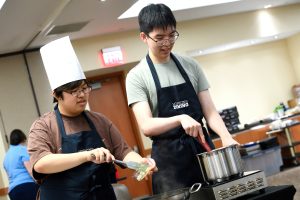 Cooking with friends, even occasionally, can make preparing meals feel less overwhelming while reducing reliance on takeout packaging. It can also be an opportunity to share simple recipes, learn new skills, and spend time together outside of academic schedules!
 Visit your local farmers market. Take a break from classes to enjoy a morning walk to the market with friends. You can shop for seasonal produce in bulk. Not only will you save money but support your community. Just don’t forget to bring your reusable bags or a small wagon!
 Get involved in cultural clubs at JHU! Many host cooking nights that bring members together to bond while sharing dishes that remind them of home. Even if you don’t personally identify with that culture, many clubs welcome cross-cultural connections, so bring a friend for moral support and take the opportunity to learn something new together. Find clubs on Hopkins Groups.
Sometimes sustainability starts with everyday choices, and a meal shared with friends might be one of the simplest places to begin.