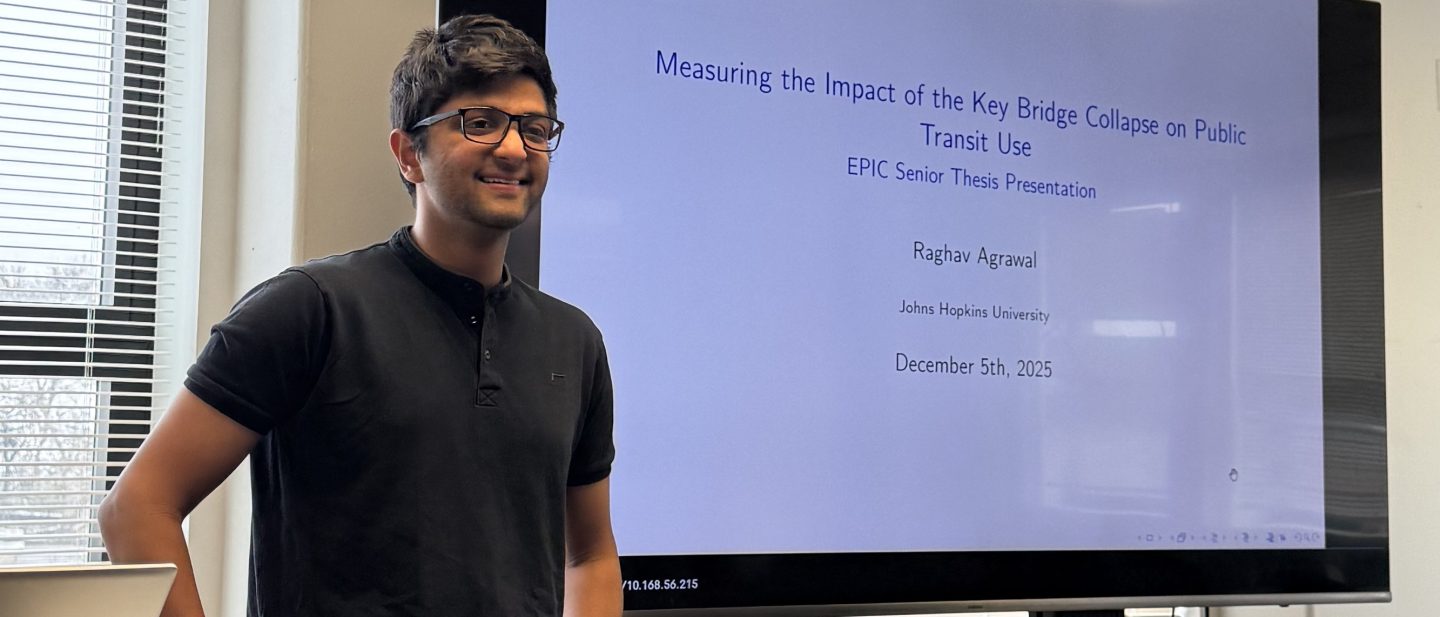
Raghav Agrawal is an undergraduate senior majoring in Economics with minors in Mathematics and Environmental Studies at the Johns Hopkins University Krieger School of Arts and Sciences. He will graduate early in December 2025.

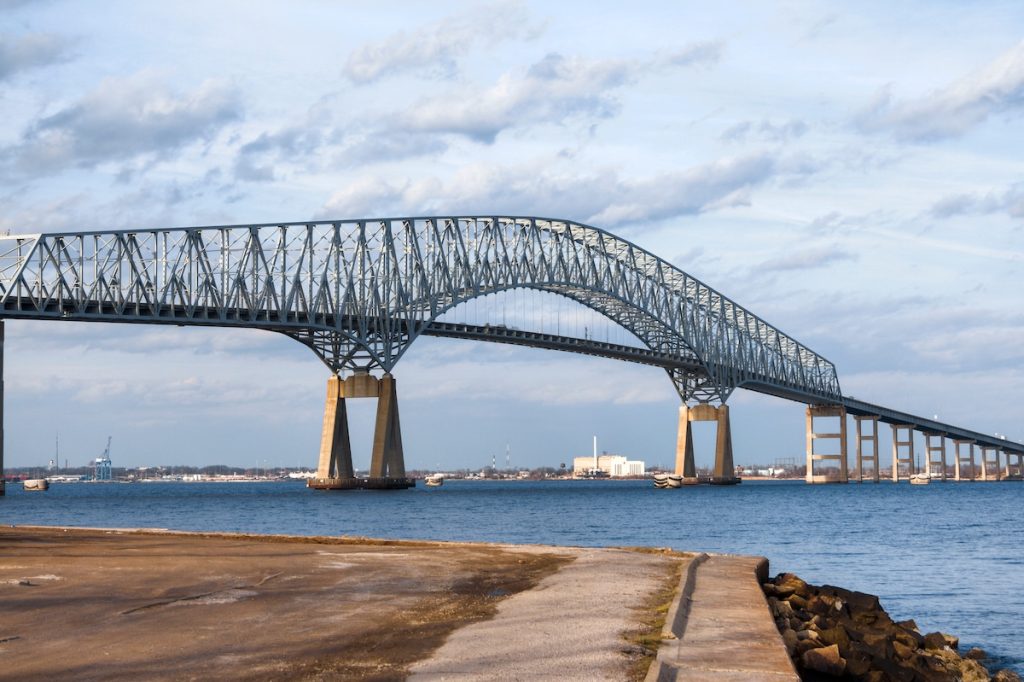
For his economics honors senior thesis, Agrawal is studying the effects that the March 26, 2024, collapse of the Francis Scott Key Bridge had on public transit use in Baltimore. To conduct his research, Agrawal is using an econometrics technique called a difference-in-differences (DiD) model that estimates causal effects by comparing similar groups over time – in this case, he is comparing transit use in Baltimore to transit use in Cleveland, Ohio. The two cities each have a similar geographic size, similar transit use per capita use, and similar common modes of transit (bus and light/heavy rail). Because similarities in transit use existed in both cities prior to the Key Bridge collapse, Agrawal can utilize transit use data to draw conclusions from the effects of the event.
Agrawal submitted his thesis at the conclusion of the fall semester. On the final day of classes, he presented his findings to EPIC, an economic policy club on campus that Agrawal helps organize.
We sat down with Agrawal to learn more about his research:
What sparked your interest in this work? Have you always been interested in public transportation?
“I could probably give a whole presentation on my love for public transportation,” says Agrawal.
Initially, Agrawal fell in love with public transportation because it offered him independence and an opportunity to gain knowledge about getting to different places on his own. A monorail runs right in front of Agrawal’s childhood home in Mumbai, India, and once he began using it alongside other modes of transit, he no longer needed to rely on his parents to get from place to place.
In Mumbai, there is an extensive suburban rail network that serves as the most common form of public transportation. The system is heavily used but underinvested in, says Agrawal. Buses, yellow cabs, and a newly constructed underground metro line offer alternatives to the rail system in Mumbai.
“As I grew older and thought more about the world, I realized that public transit is the great equalizer,” says Agrawal. “A man in a suit going to a business meeting is on the same train as the young boy selling tea, trying to scrounge up enough to help his family eat tonight.”
“It gives everyone a great opportunity to get ahead,” he says.

What inspired your thesis project?
As an international student, Agrawal feels proud to call Baltimore home.
“It was very important for me to focus my research on this city, given how much I love it,” says Agrawal.
This research began as a final project for an economics class at JHU. Agrawal and fellow students needed to design a suitable research project that would appropriately analyze a theoretical dataset and model. Agrawal’s proposal piqued the interest of the class’s teaching assistant, PhD student John Green.
“[Green] took a personal interest in the project and was, has, and always will be one of the biggest supporters of this work,” notes Agrawal. “He pushed me into not just thinking of this as a final project for a class, but also as a thesis, as research, and as a potential paper that we hope to write together in the future.”
What were your hypotheses going into this project?
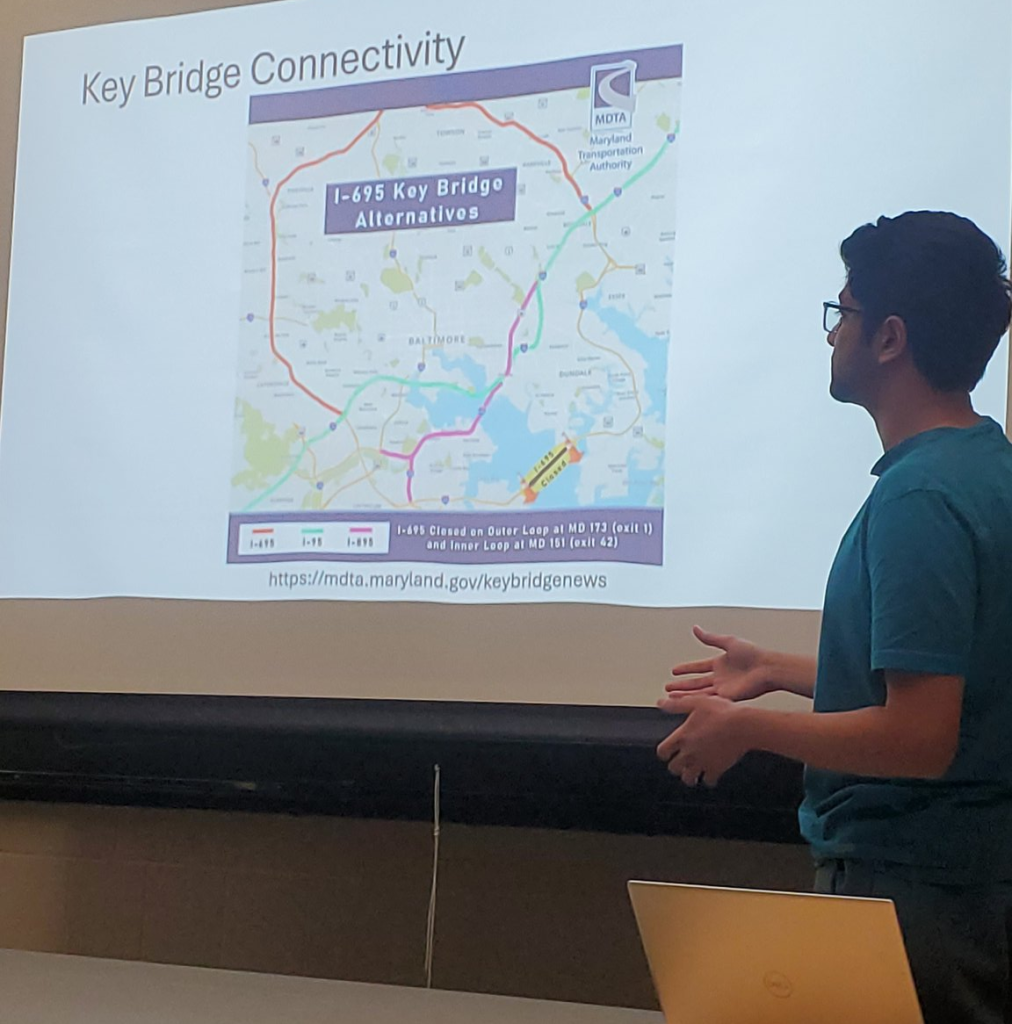
“The Key Bridge collapse also took out a vital artery along the interstate system that used to host almost 33,000 cars a day,” says Agrawal. “Those cars are being pushed onto not just other interstate roads in Baltimore, but also local roads. That is definitely increasing congestion in the city.”
The initial question that Agrawal posed for his project was: How does congestion affect transit use? After beginning his research, he learned how “fickle” transit use can be and thus decided that it would be improper to pose a hypothesis that confirmed any one direction or effect of the bridge’s collapse.
“Something that I contended with a lot was going into this project with a lot of priors,” says Agrawal.
He was challenged to suppress his initial preconceptions, such as assuming that people stuck in traffic in their cars would get frustrated enough to change their habits and rely on public transportation. As his research progressed, Agrawal learned that although that may be his hope, it is not necessarily the case: multiple factors lead to individuals’ transportation decisions, and this variability can make it difficult to predict mass habits and trends.
What data sources are you using for this project?
Agrawal received special access to a highly proprietary dataset published by Replica – a company that collects data on all kinds of transit nationwide, both public and private. From this dataset, Agrawal can calculate the percentage of trips that leave a certain census tract via public transportation in both Baltimore and Cleveland.
“I was very fortunate that they gave us this data for free for academic use,” says Agrawal.
In addition to this company dataset, Agrawal received assistance and data from both the Maryland Transit Authority (MTA) and the Greater Cleveland Regional Transit Authority on the quality of buses and other transit use. He also utilized the General Transit Feed Specification for access to schedules of different modes of transportation.
Describe the intention of your research as it relates to sustainability.
“Vehicular emissions in cities are some of, if not the most, decentralized forms of emissions,” says Agrawal. “Public transit [provides] an opportunity to make emissions reduction more centralized.”
According to Agrawal, the more decentralized an industry is, the harder it is to have a standard, uniform policy. Controlling emissions of thousands of privately owned cars of various models and gas mileage efficiencies is much more difficult than controlling emissions of a set number of publicly owned transportation vehicles.
“Reducing vehicular emissions through the use of public transit is a huge aspect of making cities sustainable,” explains Agrawal.
What is the importance of environmentally focused research at large?

“Climate change is going to affect us and, more importantly, disproportionately affect others that do not have the same resources that we do,” says Agrawal. “We owe it to the entire world, not just our neighbors, to try to use our platform [as researchers] and the resources that we are given to conduct research that helps us help the environment.”
Environmental research should be more accessible to the masses, according to Agrawal, and should focus on aspects of people’s lives that they may not think cause environmental damage. This would extend the impact of research to groups outside of research or academic communities.
“Everyone uses some mode of transit to get to some place,” says Agrawal. “If we can help people realize that there are personal decisions that they can make to help the environment, we can make environmental research more accessible to all and bring more people on board.”
What is your favorite mode of transportation?
“I have been contending with this question for a while now,” says Agrawal. “Anything on rails is a great form of transit. I am a big fan of metros. Specifically, metros that have dedicated infrastructure for themselves.”
